

All posts by Robert Estrin

When Was the Golden Age of Pianos?

Robert Estrin here from LivingPianos.com with another great question. When was the golden age of pianos? You may have heard the term, “Golden Era”, particularly referring to American pianos. Did you know,

A hundred years ago there were over a thousand companies manufacturing pianos in the United States!

Even before the Great Depression and the crash of the stock market in 1929 there were still hundreds of piano companies in the U.S. The piano was as ubiquitous in homes as big screen televisions are today and in no small part by the player piano.

The player piano was the first home entertainment system.

In the late 1920’s the piano plummeted as radio and phonograph technologies came about. Of course when the Great Depression hit, the piano industry was heavily impacted. The golden era was really before this time. Yet, you could say it extended to before World War II when there were still hundreds of piano companies in this country.

However, during the 1930’s there was tremendous attrition of the piano market for the reasons I articulated: The Great Depression as well as technologies in audio such as radio and the phonograph dealt a death blow to the piano market. Yet there were still many companies making fine pianos.

Ten times more new pianos were sold in the United States sometime between the turn of the century and before World War I.

Remember, that was when the population was less than ⅓ of what we have today! The piano was extremely popular. That was the golden era.

Today, the piano has a renascence of activity in:

China where there are more companies manufacturing pianos than there are piano stores in the United States!

80% of the world’s piano students are in China today. You’ve got to be thankful that the piano is alive and well, just not in the United States like it used to be.

Of course, there are many of you who love the piano just as I do and they will always be around. Keep the questions coming in, again I’m Robert Estrin from LivingPianos.com, Your Online Piano Store.

info@LivingPianos.com
949-244-3729

What is the future of player piano technology?

This is Robert Estrin from LivingPianos.com, Your Online Piano Store with the question: What is the future of player piano technology? If you’ve been paying attention in the last couple of decades to what has been going on in this field, it is pretty fantastic. Player pianos have a long, rich history going back to the 19th Century. This was a contraption that went in front of your piano to play it. Soon after was an explosion of the player piano. Every home had to have one, much like how we have big-screen televisions today in just about every home. They were incredibly popular. Three times more pianos were purchased back then than today, with a population less than a third of what it is now. It was really the glory days of the player piano at the turn of the century until the 1920’s when the phonograph and radio came in and wiped out the player piano. However, they made a resurgence in the 1980s with the cassette-based player, floppy disks, CDs, and today we have wireless player pianos.

Wireless Piano Player Technology

Wireless player pianos can both record and play back performances. Yamaha’s Disklavier has been doing that for years on a very high level. Steinway with their Spirio system can now record and playback impeccably. There are other amazing things they can do. For example, the libraries that were created on the piano rolls of the expressive players, which they had at the turn of the century, offers performances of composers and pianists who may have recorded on 78 RPM awful sounding recordings. They recorded on piano rolls which recorded every nuance of their playing and have since been digitized. You can listen to Rachmaninoff or Gershwin play ‘Rhapsody in Blue’ on your modern player piano.

On the Spirio system and the Disklavier, they have their artists come in and make titles. They have other instruments that play through audio in perfect synchronization. You can even have videos of your performers and your piano plays live with the video. These are all things that are happening now. There are other features you may not be aware of. Disklavier can have concerts in multiple cities simultaneously by having their systems set up in concert halls. Auditions are also done this way so that people don’t have to travel so far. They may have a West Coast center and a New York center where people can play at and the judges can be wherever they want to be. The piano will play the same part for them, live.

What is on the horizon with player piano technology?

Are we done? Not by a long shot. One thing that Steinway is doing is taking old audio recordings of Horowitz, Rubinstein, and others and are digitizing them so that your piano plays their actual piano performance, even if they never made piano rolls. That technology may get good enough so that you could do that on your own someday. It isn’t there yet, but it is something to look forward to.

Another thing to look for is the emergence of hybrid pianos. Hybrid pianos use the front end of an acoustic piano, the action, with a digital sound generation. Combine that with player technology and the possibilities are endless. What is in store with player piano technologies? We can only guess. It has been very exciting in the last few years. I look forward myself and have been working on a prototype of a new category of modular concert grand systems that you’ll be hearing more about.

So glad to have you join me, Robert Estrin here at LivingPianos.com, Your Online Piano Store.

info@LivingPianos.com
949-244-3729
Can Music Be Created Instantly?

This is Robert Estrin at livingpianos.com. The question today is, can music be created instantly? Truth be known, nearly all the great composers were phenomenal improvisers. We can only imagine what it must have been like sitting and hearing Liszt make up one of his fantasies, or hearing Mozart improvise theme, variations and sonata movements with good form and beautiful architecture of melodies and harmonies. So, yes, music can be created instantly.
In this video, I’m going to create an improvisation and see what I can create for you on the spot with zero preconceived notions as to what is going to come out. I hope you enjoy!

Is improvisation dead in the world today?

Well, in classical music it’s really just a micron of the entire industry of classical music. But in jazz and other forms of music, improvisation is a vibrant art form, and the crafting of solos by great jazz artists is awe-inspiring.

So, the tradition lives on in other styles of music today. I hope you’ve enjoyed this. Again, I’m Robert Estrin here at livingpianos.com, Your Online Piano Store.
Thanks so much for joining me.

info@LivingPianos.com
949-244-3729
Honest Expression On Demand!


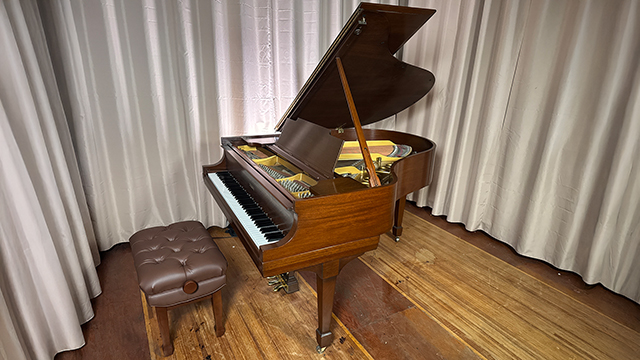
Sitting down at a beautiful semi-concert grand can be inspiring! But the challenge of being able to instantly remove all distractions and focus solely on music can be enormous!

At first, I wasn’t going to release this video since the video quality isn’t the best. But after relistening to the music, I believe it is worth checking out.

Hope you enjoy!
Robert@LivingPianos.com
949-244-3729

How to Memorize Music Faster

This is Robert Estrin from LivingPianos.com today with a great tip for you about how to memorize music faster. Don’t we all want to be able to learn music faster? Someday maybe they’ll put a chip in your head and you’ll have all the sonatas of Beethoven or the well-tempered Clavier of Bach. Wouldn’t that be great? In the meantime, we’ve got to go through and memorize music. I’ve explained in detail in some of my other videos the process.

HOW TO PRACTICE THE PIANO PART 1 – MEMORIZING MUSIC

Today I’m not going to go into all the details about how to memorize. I’m going to show you one incredibly important technique that can save you vast amounts of time:

Practicing in Chords First

Let’s say you were learning the famous Mozart Sonata in C major K 545. As I’ve explained before, you want to learn hands separately first. Start with a little section, something you can digest relatively quickly. You want to be productive your entire practice section instead of taking on a big section that wears you out for the day too early on. Pay attention to the left hand. What is it doing? It is what is referred to as alberti bass, basically broken chords.

WHAT MAKES MOZART SO SPECIAL?

It seems like a lot of notes. Or is it? If you think about it, it is really just several broken chords.

The whole first measure can be reduced down to one chord!

This has many benefits for you. You will understand intrinsically the underlying harmony. This is because you see the chords you are playing instead of separate notes. It also enables you to discover the best fingering to accommodate chord to chord instead of thinking separate notes. You’re going to understand the structure of the music better, you’ll find a better fingering, and it is less to learn.

This was a short tip but it can save you hours of work when learning your music while solidifying your understanding of the underlying harmonic structure. I hope you’ve enjoyed this. Again, Robert Estrin at LivingPianos.com, Your Online Piano Store. See you next time.

info@LivingPianos.com
949-244-3729
What is an Opus?

This is Robert Estrin from LivingPianos.com with a really interesting question for you: What is an opus? You probably have heard this when you go to concerts and see, for example, a piano Sonata no. 7, opus 10 no. 3 by Beethoven. You may have wondered what this means. You have the number of the piece, the key of the piece, what does opus mean?

Opus numbers started way back in the time of Handel in the 1700s. It is a way of organizing music so generally, lower opus numbers are earlier works, and higher opus numbers are later works. However, it is not quite so simple. If you have sonatas numbered, that already tells you when they were written. Why would you still need opus numbers? Chopin wrote a whole book of mazurkas and an entire book of waltzes. Many of them are in the same key and to be able to identify them, opus numbers can be very handy.

Let’s say Beethoven had three sonatas he wanted to publish. He would go to his publisher with the works. If the last works he published were, “opus 9”, these new compositions would be cataloged as, “opus 10”. If he presents three piano sonatas opus 10, they will be designated as opus 10 no. 1, opus 10 no. 2, and opus 10 no 3. That is a whole body of work. Next time he composes music it will be cataloged as opus 11. It could be piano pieces, string quartets, or a symphony. It depends on what is in that opus. It could be one work or a group of works.

Each opus represents a group of works published together

Here is where it gets a little tricky. Sometimes opuses are out of order. For example, the Opus 49 Sonatas of Beethoven come to mind. He wrote two sonatas that were published pretty late, Opus 49, yet they were written much earlier. While these pieces were composed earlier in his life, he didn’t publish them until later on.

You can’t always go by opus numbers in regards to the date that something was written.

However, they provide a way to clarify what works you are referring to. That is the whole purpose of opus numbers. Why do I bring this all up? It is a little personal story. Years ago, I composed a piece that was a mammoth work for synthesizers, digital pianos, and a whole host of other technologies. I called it “Opus 1” because I thought it was a cool name. I just did an improvisation in my living room after visiting my daughter in Portland, Oregon. I hadn’t touched the piano in a few days and I just came in, hit record, and sat down. I’m calling it “Opus 2” for you.

I hope you enjoyed this brief tutorial on what “opus” means. If you have any questions I’m always here for you: robert@livingpianos.com I’d love to hear from you. Thanks for joining me again. This is Robert Estrin from LivingPianos.com, Your Online Piano Store.

info@LivingPianos.com
949-244-3729