


Piano and Music Videos

Can't find what you're looking for?

In the first installment of this series, we talked about the evolution of the piano in terms of traditional pianos and the new design elements being implemented. The use of synthetic materials in traditional pianos is an incredibly interesting development in piano design and production. I received a number of comments from all of you and I really appreciate the conversation and insight you all provided.

In this next installment, I would like to discuss the advancement of pianos when it comes to digital and hybrid pianos. They have come a long way, so long that they are actually becoming a preferred format for certain musicians and venues.

Many years ago the first attempts at making electric pianos emerged. In truth, they sounded nothing like actual pianos. The Wurlitzer and the Fender Rhodes pianos had traditional piano keyboards but they produced bell-like sounds. It wasn’t until the late 1970’s and early 1980’s with the invention of digital sampling that digital pianos could actually sound like a real piano! They achieved this by having little recordings for each note and then looping them – the technology wasn’t available to record the entire length of each note so only a small sample of the attack portion of the note was used. The decay of the notes was achieved by looping a portion of the sound and fading it out. I actually owned a Kurzweil K250 – an 88 note digital wooden key piano, one of the first instruments capable of replicating the sound and feel of a piano. I enjoyed producing many soundtracks in my studio since the Kurzweil offered hundreds of strikingly realistic instrument replications.

Since that time, digital sampling has evolved tremendously. Now digital pianos most often have several recordings of each note at different velocity levels. The realism of these instruments is simply astounding. There is actually a newer technology called physical modeling which takes into account the attack of the keys and the hammers hitting the string and many other aspects of the sound we never thought possible when digital pianos were first invented. This technology makes it possible to replicate pianos that couldn’t exist in the real world – twelve and twenty-foot pianos, aluminum strings – the possibilities are endless.

Some of the best digital pianos today are software based, which is why a lot of professionals utilize something called keyboard controllers. These don’t produce sounds but they actually transmit key information via MIDI (Musical Instrument Digital Interface) to a laptop, computer, or sound module which allows the player to use the latest in technology without having to buy new keyboards every year.

Digital pianos generally fall into two categories: portable and home units. Portable digital pianos are generally used by professionals. They usually have no speakers or very small speakers on board. They are hooked into sound systems for performance and recording. These are like portable pianos except they produce sound digitally and have a much simpler type of action mechanism. The other type of digital piano can actually look like a real piano but they have no strings or soundboard. They also produce the sound digitally but have substantial sound systems built into sometimes extravagant furniture.

In my opinion, some of the inexpensive digital pianos are just as good as units costing much more. When you spend more you are mostly getting better furniture and more substantial sound systems. Some of these high-end digital pianos from Korg, Yamaha, Kurzweil, and others are so advanced they offer the players even more options than ever before. You can plug in microphones to harmonize your voice with the piano; you can record yourself digitally creating full orchestrations! There are music software programs for learning music theory and more.

But are digital pianos really a substitute for traditional pianos? In a pinch, yes. But what’s more impressive about these instruments is the things you can’t do with a traditional piano. As far as recording music, the software available on these pianos is incredibly powerful – you can record multiple lines of music, you can bring up your notes and edit them; the options are endless. It’s like having a word processor for music at your fingertips!

But when it comes to hybrid pianos, things get a little more interesting. Roland and Yamaha have pianos now that are considered hybrids – they are trying to bridge the line between digital and acoustic pianos and they are getting closer.

Some of these hybrid pianos like the Yamaha AvantGrand actually have full piano actions in them and function as normal, but the sound is created digitally.

These pianos can be incredibly useful in certain situations. If you ever had to practice on a practice room piano in a school, you know how hideously out of tune these pianos almost always are. With people playing them constantly they will hardly ever be in tune or voiced to a decent level of performance. Traditional pianos just aren’t capable of withstanding that kind of use. With a hybrid piano – where the action is the same as a real piano but the sound is digital – this can provide a better alternative to an acoustic piano. There are plenty of situations – like hotels or restaurants where hybrid pianos offer an ideal solution.

The question is whether we will ever get to a point where hybrid pianos are actually more common than traditional acoustic pianos? I believe that there is nothing better than an acoustic piano, however, in certain situations, I would much prefer to play on a high-quality hybrid piano than a beaten up acoustic piano.

As always, I’m interested in your opinions and thoughts on this matter. Robert Estrin: Robert@LivingPianos.com (949) 244-3729

The Evolution of the Piano Part 2: Digital and Hybrid Pianos

In the first installment of this series, we talked about the evolution of the piano in terms of traditional pianos and the new design elements being implemented. The use of synthetic materials in traditional pianos is an incredibly interesting develo

So What Are the Best Piano Brands?

The country of origin is often the best indicator of the quality of pianos. Since piano production began in Germany and the United States, these represent the very best piano brands.

The United States only has 3 manufacturers left although there used to be hundreds of piano companies building in America. Today we have only:

Steinway

is Steinway the best piano brand


Steinway makes about 2500 pianos a year


Mason & Hamlin

is mason and hamlin one of the best piano brands


Mason & Hamlin builds only 250 pianos per year


Charles Walter

Charles Walter, one of the top piano brands in the united states


Charles Walter is a relative newcomer which builds only about 65 pianos each year.


The best European pianos come primarily from Germany:

Bechstein

Bechstein is one of the best piano brands in the world

Bluthner

Bluthner pianos are one of the best brands

Bosendorfer (from Austria)

Bosendorfer is one of the best piano brands in Europe, they are based in Austria

Fazioli (from Italy)

Fazioli from Italy is one of the best piano brands in the world

The Eastern European pianos are not as refined but offer excellent value:

Petrof/Weinbach

(The same company produces both pianos.)
petrof and weinbach are among the best piano brands

Estonia

estonia is one of the best piano brands in europe

Japan makes the best Asian production pianos. There are 2 companies which are the largest and second largest manufacturers of pianos in the world:

Yamaha

Yamaha is one of the best asian production brand pianos

Kawai

kawai is one of the best piano brands in Asia

Both companies have factories throughout Asia (not just in Japan) and the best pianos they build are made in Japan. They offer everything from budget instruments to hand-made pianos rivaling the best German and American pianos.

Korea has been making pianos for quite some time. While not as refined as the Japanese pianos, they continually improve. There are 2 Korean piano manufactures both of which have factories in other countries:

Samick

samick is a great piano brand, is it one of the best?

Young Chang

young chang is one of the best asian piano brands

Samick sells pianos under many different brand names including Kohler and Campbell, Knabe, Sohmer, Pramberger, Remington and many more. These are referred to as “stencil pianos” since the original manufacturer is either out of business or it is a made up name. Young Chang sells pianos under the Weber name.

Best Piano Brands YouTube Video

Best Piano Brands

What Are the Best Piano Brands?

The country of origin is often the best indicator of the quality of pianos. Since piano production began in Germany and the United States, these represent the very best, pianos.

Top 5 Piano Myths

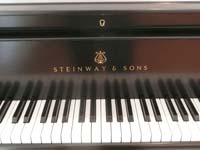
1. Steinway is the best piano in the world.

steinway piano

There are a handful of piano companies which make pianos equal in quality to Steinway. (For example: Bösendorfer, Bechstein, Fazioli, Blüthner and Mason & Hamlin are all top notch pianos with rich histories.) In fact, if you look in the latest supplement to “The Piano Book”, by Larry Fine, New York made Steinway pianos are rated in the 3rd rank of pianos according to manufacturing quality. So why is Steinway recognized as the undisputed leader? In a word: marketing. Just as Microsoft dominates computer software because of aggressive licensing arrangements, John Steinway helped propel Steinway & Sons to its market dominance through exclusive artist contracts and favorable institutional arrangements.

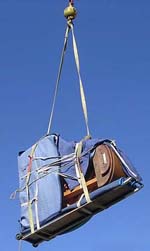
2. When you move a piano it has to be tuned.

piano moving

This is a half truth. The fact is, a piano that is moved will show up pretty much as it left most of the time. However, after the piano gets acclimated to its new environment, it will require tuning. The piano may not sound bad, but the pitch of the entire instrument may adjust slightly up or down. It is important to keep a piano stable. It is best to wait at least a couple of weeks or even longer after a move before tuning to make sure the piano has settled.

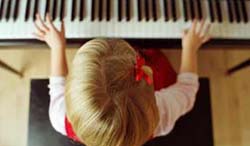
3. Kids banging on a piano may damage the instrument.

kid playing piano

While it can grate on your nerves, the force with which kids hit the keys of a piano even with their fists can’t match the power professional pianists inflict upon a piano in concert. Just be sure that the children don’t take sharp or heavy objects to the keyboard since this can damage the instrument.

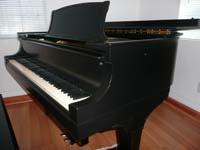
4. The fall board of a piano must have a slow close feature to avoid injury.

piano fall board

The slow close fall-board feature of a piano is a great marketing tool. The truth is, unless you have some really wild kids, the incidence of being hurt by a falling fall board is quite rare. Most of the best pianos including Steinway do not offer a slow close fall board.

5. You shouldn’t place a piano on an outside wall.

piano fall board

Even in a temperate climate, the insulation of modern homes will keep the temperature fairly stable even on an outside wall. However, it is important to avoid direct sunlight on your piano. This will not only effect tuning stability, but it will fade the finish in a matter of weeks. Also, you should keep your piano closed particularly at night. If you leave your windows open at night, the moist night air will rust the strings. Also, even with the piano closed, the cooler air can make the sound board contract destabilizing the tuning. Use your judgment in balancing the enjoyment of your piano versus its longevity.

I’m interested to hear your opinions and thoughts on these piano myths. Please leave some comments below. Thanks for reading.

TOP 5 PIANO MYTHS

Top 5 Piano Myths 1. Steinway is the best piano in the world. There are a handful of piano companies which make pianos equal in quality to Steinway. (For example: Bösendorfer, Bechstein, Fazioli, Blüthner and Mason & Hamlin are all top notch pi

This question is not as simple as it seems. At first, you might consider that Bartolomeo Christofori is credited with inventing the piano in 1709. (Although, there are accounts of pianos prior to the 18th century.) However, the instrument that Christofori built was actually a harpsichord (the predecessor of the piano). In fact, he called his instrument, “Arcicembal che fa il piano e il forte” which translated from Italian is, “Harpsichord with soft and loud”. Eventually the name was shortened to the “pianoforte” and then simply the “piano”.

The harpsichord is a keyboard instrument that creates tone by plucking strings with duck quills. As a result, the force with which the keys are depressed doesn’t affect the volume. Christofori developed a primitive hammer action which allowed for dynamics. However, there were subsequently countless technical innovations that led to the development of the piano as we know it.
It was during Beethoven’s life that the piano experienced dramatic evolution. While Christofori’s keyboard was made entirely out of wood, little by little, metal bracing was added to strengthen the piano. By the late nineteenth century, nearly the entire inside of the piano became reinforced by a cast iron plate which supports enormous string tension. Steinway & Sons was producing a fully modern piano by the late 1800’s.

So, it is a subjective question as to when the first “Piano” was played. It depends upon how you define the piano. In the strictest sense one could argue that Christofori played the first piano at the turn of the 18th century. Or, perhaps the first piano was played by Henry Steinway! However, Franz Liszt was the first to play the piano as we know it. The first person to play solo piano recitals, Liszt transformed the instrument to a modern standard with the help of countless instrument builders. While the instrument he played was not quite a modern piano, his performances solidified the piano as we know it today.

When was the first piano played?

When was the first piano played? This question is not as simple as it seems. At first, you might consider that Bartolomeo Christofori is credited with inventing the piano in 1709. (Although, there are accounts of pianos prior to the 18th century.) Ho