


Welcome to LivingPianos.com. I’m Robert Estrin. This is part two of the Chopin G minor Ballade complete tutorial here on LivingPianos.com. In this section, we explore some of the most powerful and technically demanding music in the work, along with practical strategies for practicing it effectively and musically.
From Poetic to Heroic
At this point in the piece, the main theme returns in a grand, heroic form. What’s remarkable here is how the same theme takes on a completely different character. Earlier it sounded poetic and reflective. Now it appears in massive chords with tremendous strength and breadth. Part of this transformation comes from the key change. Chopin moves from E-flat major to A major, a tritone away. That alone gives the music a strikingly different color. Combined with the powerful chordal writing and rich voicing, the familiar theme suddenly feels heroic rather than intimate.
Practicing the Massive Chord Section
One of the most important practice methods is to work without the pedal. Practicing without the pedal forces you to create legato with your hands instead of relying on the pedal to connect the sound.
The secret to producing powerful chords without harshness is to play from the surface of the keys. If you try to strike the chords from above, the sound becomes harsh and unpleasant. Instead, rest your fingers on the surface of the keys so they are not yet depressed, then release the weight of your arms into the chords. This approach produces a warm, full tone. Even without the pedal, you can achieve remarkable legato simply by using arm weight and careful control.
Creating the Illusion of Power
When learning this passage, play as legato as possible. You do not need to play every note at full volume. In fact, it can be helpful to sacrifice a little power in the inner chords while anchoring the octaves. By emphasizing the octaves and keeping the other notes lighter, you create the illusion of great strength without using excessive effort. When the pedal is added, the result sounds far bigger than what you are actually playing.
Listening for Inner Voices
Another detail that should not be ignored is the inner voice in the right hand. There is a beautiful countermelody hidden within the texture. Bringing out these inner notes adds richness and musical interest. Fingering is also important for achieving good legato. Whenever possible, use the fourth finger on black keys and sometimes even on white keys if it helps connect the notes smoothly. All of these small details contribute to a more beautiful sound.
Practicing the Massive Chord Section
As the music climbs toward its peak, it can help to practice the passage in small sections. One useful strategy is to isolate groups of notes and practice lifting between them. This allows the hand to reset and stay relaxed.
Slow practice remains the foundation. Working carefully with a metronome and gradually increasing the tempo is essential. But once the notes are secure, you can experiment with other approaches to improve fluency. For example, temporarily leaving out a note can help your hand feel the shape of the passage. Once the motion feels natural, add the missing note back in. Rhythmically, this section also features a hemiola effect, where the accents shift against the expected beat.
Turning Runs into Chords
Next comes a passage everyone recognizes, full of fast-moving notes. A great way to practice this kind of writing is to turn the runs into chords.
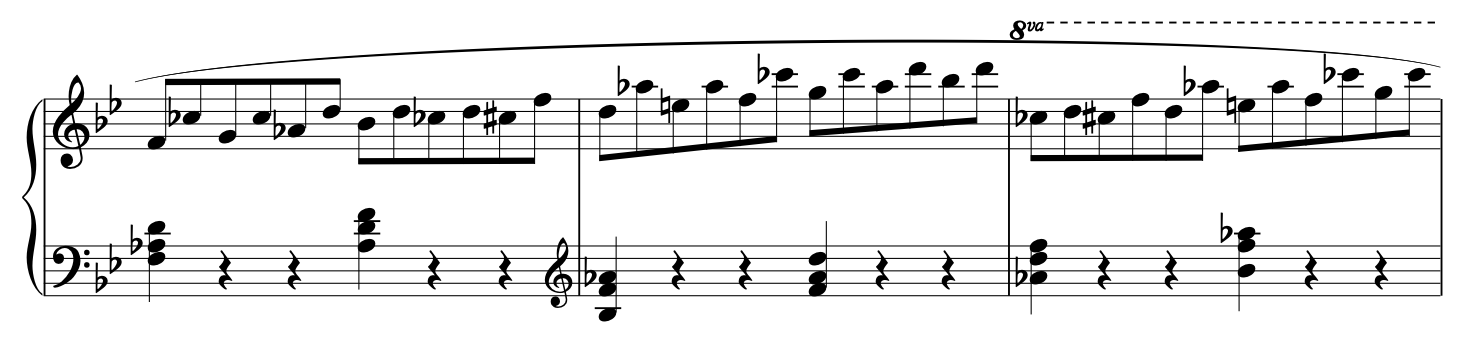
When you play the notes as chords, you immediately discover the most comfortable fingering. It also reveals the harmonic structure underlying the passage. Once the harmony and fingering are clear, returning to the original pattern becomes much easier. You can also reverse the patterns, practice in different directions, or apply rhythmic variations.
Choosing the Right Practice Technique
There are many practice techniques available, but the goal is not to try every single one. Instead, experiment until you find the method that reveals the solution for each specific passage. If metronome practice alone solves the problem, that is wonderful. But when progress stalls, that is the time to experiment with rhythms, accents, note groupings, or phrasing changes. Think of practice as having a toolbox. You only need the tool that solves the problem at hand.
Relaxation Through Note Groups
A key concept for difficult passages is practicing in small note groups with complete relaxation between them. Rather than pushing through a long string of notes, play a short group, release all tension, and then begin the next group as if starting fresh. It is almost like taking a brief rest in the middle of the passage. This approach prevents tension from building and allows you to maintain control even at high speeds.
Strength Versus Control
Some pianists develop enormous strength by practicing many hours a day. That strength can carry them through extremely demanding passages. But many legendary pianists relied more on relaxation and control than brute force. Their playing had a jewel-like clarity and refinement. Relaxation not only makes technical passages easier, it also produces a far more beautiful tone.
Working with the Metronome
When increasing tempo with the metronome, raise it one notch at a time. It may seem slow at first, but it is incredibly effective. Only raise the tempo when you can play the passage correctly and comfortably. If the notes are accurate but you feel tense, the tempo should remain where it is. At first the progress may feel slow. But once the passage becomes secure, the tempo can increase surprisingly quickly.
In fast passages, the motion should come primarily from the fingers. Avoid relying on arm weight or large wrist movements, which are better suited for slower, lyrical playing. Light finger action close to the keys allows the passage to scale up to fast tempos.
Practicing Short Note Groups at Tempo
Another valuable technique is to practice very short groups of notes up to speed. This trains your hand to play the passage at tempo. Once the pattern feels natural, you begin linking the groups together while maintaining relaxation between them. This method helps solve the common problem of passages that feel easy slowly but fall apart when played quickly.
Clarifying the Left-Hand Rhythm
Later in the piece the left hand introduces a distinctive rhythmic pattern. When practicing slowly, it can help to exaggerate the rhythm.
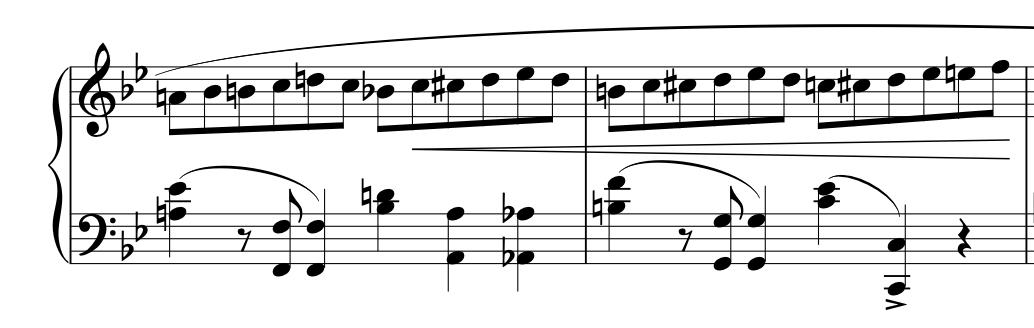
nstead of treating it as a simple eighth rest followed by an eighth note, try lengthening the rest and making the following note extremely short. This exaggeration clarifies the rhythm so that it feels precise when played faster. Thinking of each measure as a fresh starting point also helps keep the hands relaxed.
Applying the Same Practice Tools
Throughout this section the same practice tools can be applied repeatedly:
Turn runs into chords.
Practice accents.
Use rhythmic variations.
Break passages into small groups.
Work without pedal to refine fingering and legato.
The most important idea is that practice should always involve discovery. If something is not improving, change the approach.
The Five Against Six Passage
One particularly challenging moment has five notes in one hand against six in the other.
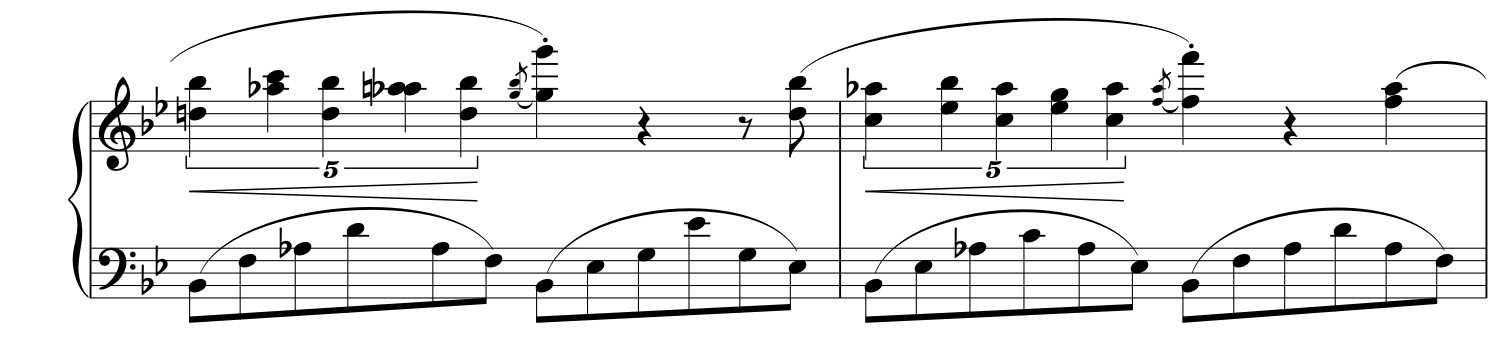
When practicing slowly, exact alignment can be confusing. Instead, focus on understanding which notes fall between others. Practicing the alternation between hands helps clarify the relationship. The placement of the grace note also matters. If it is played before the beat, the rhythm can unintentionally become six against six. Placing it on the beat preserves the intended five-against-six relationship.
Building to the the Climax
As the music approaches the climax, make sure the low B-flat octave in the left hand really speaks. Even if the surrounding notes are not extremely loud, that single note can create a powerful sense of arrival. The high B-flat at the top of the texture reinforces this climactic moment as well.
Returning to the Main Theme
After the dramatic climax, the music gradually relaxes and melts back into the main theme. This passage can be surprisingly tricky because the fingering does not fall naturally under the hand. Finding the most comfortable fingering takes experimentation.
When the theme returns, it should not sound the same as it did at the beginning. At first the theme felt youthful and newly discovered. By this point it has experienced the turbulence and emotional extremes of the music. The final return has a different character, more somber, quieter, and more reserved.
The Final Technical Passage
Before the coda there is another demanding passage of sixths. When playing sixths, it’s not always possible to connect both notes smoothly. By ensuring at least one note is connected, you can maintain a legato line. Good fingering will make this easier. Practicing the passage in short segments allows the hand to learn each pattern comfortably before connecting them.
Approaching the Grand Coda
All of this leads to the famous coda, one of the most thrilling conclusions in Chopin’s music. It is a roaring, virtuosic ending that brings the Ballade to its dramatic finish. We will get into the blistering coda in part 3!
I’d love to hear how these approaches work for you! If you’ve tried any of these practice techniques, or discovered your own ways to tackle challenging passages in the G minor Ballade, share your experiences in the comments here at LivingPianos.com and on YouTube. Your insights can help others in this community as we explore this extraordinary music together.