

Tag Archives: morton estrin

In the studio with Morton Estrin – What I Learned Watching My Father Practice the Piano

Welcome to LivingPianos.com, I’m Robert Estrin. Today I want to tell you about what I learned watching my father, Morton Estrin, practice the piano. It brings back such memories. We grew up in a house in the suburbs on Long Island, about an hour from Manhattan. When we first moved into that house, I was five years old. It was a very exciting time. My father had a studio built. We had a pretty big house to begin with, but the studio was enormous! We had a lot of concerts there, and a lot of fun.

Although my father taught music at Hofstra University, he did most of his teaching right in the back of our house.

He did an immense amount of teaching! But whenever my father had any time free from teaching, he would be practicing piano. I would often go down there to sit and listen to him. I always found it interesting. I want to share with you an extremely personal story about what I learned watching him practice. This was really an epiphany. And I’m going to share something that was kind of a sad mishap that I’ve never really shared with anybody.

My father had an illustrious recording career.

My father started making records in the 1950s. His first recording was the complete Chopin Ballades and the F Minor Fantasie, for Fantasy Records by coincidence. Then he did some recordings of the music of Meyer Kupferman. These were pieces written specifically for him. They were extremely difficult 12 tone pieces that he played all from memory! Then he started making a series of recordings for Connoisseur Society Records. Alan Silver, who was the producer and the owner of the company, was truly an artist. What he was able to achieve both sonically and musically in his recordings was truly astounding! I love those recordings to this day.

My father’s first record for Connoisseur Society was the Scriabin Opus 8 Etudes, which won record of the year.

It was the first LP of these magnificent works. Wonderful performances! Then he recorded the Rachmaninoff Opus 32 Preludes. He performed the complete Rachmaninoff preludes on several occasions, including in Lincoln Center. It’s a mind boggling task!

There was a time when he was preparing a Liszt record. I remember attending the sessions. Somehow things just didn’t gel. And even though everything was set up and the piano was chosen and the technician was there, they had to abandon the session. It was a really tenuous moment, but that’s what happened. So some time went by and then the next recording my father decided to do with Connoisseur Society Records was a Brahms album. They also had a plan for a series of albums entitled, Great Hits You Played When You Were Young, which sounds kind of corny. But these ended up being really popular. The performances were so magnificent and the recording quality was exquisite. Radio stations just loved these records! They were played constantly all over the world!

In preparation for those sessions, he worked so hard that he ended up recording three records in one series of sessions! It was just a few days. They thought it was going to be the Brahms and maybe one of these discs. He just had so much repertoire at such a high level that he slammed through three complete albums in the one session!

I’m going to reveal to you what I learned from listening to his preparation for those recording sessions.

I remember listening to him practice. He got to a point where he would just be going through everything with no pedal, taking everything a little bit under tempo. Every single finger just fell in place. It was exciting for me to hear him play like that because there was such unbelievable refinement and security in his playing. He prepared so unbelievably for those sessions. It was astounding! There were so many of those recordings that were just the first take. He was that well-prepared. He just went through all of this music. And by the way, you must listen! I’ll have links below for these discs.

You want to get to the point where you have ultimate security in your playing.

I knew from listening to my father practice that the recordings were going to be great. He was so completely prepared, he could play everything accurately in a completely relaxed manner. Most classical recordings have a lot of editing because it saves time. If you have a work that’s 20 minutes long, to get one perfect performance is very difficult. On recordings, if you have just a little cracked note that you might not notice in a live performance, it’s really annoying when you listen over and over again. But he was so well prepared for this that a minimum amount of editing was necessary.

So that’s my personal story for today. I hope you’ve enjoyed this! Thanks so much for joining me, Robert Estrin here at LivingPianos.com, Your Online Piano Resource.

For premium videos and exclusive content, you can join my Living Pianos Patreon channel! www.Patreon.com/RobertEstrin

Contact me if you are interested in private lessons. I have many resources for you! Robert@LivingPianos.com

www.LivingPianos.com
www.Facebook.com/LivingPianos
949-244-3729

Supplemental Links:

Rachmaninoff Opus 32 Preludes
Scriabin Opus 8 Etudes
Chopin Ballades and the F Minor Fantasie
The Music of Meyer Kupferman: II
Great Hits You Played When You Were Young
Can You Stretch Your Hands For the Piano?

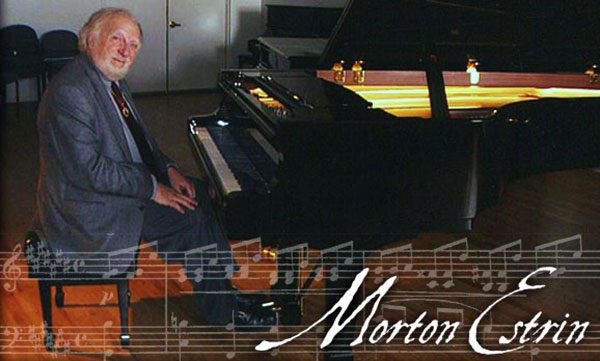
Welcome to LivingPianos.com, I’m Robert Estrin. Today I want to talk about something that is very dear to my heart. I’ve done quite a number of videos about how to play piano with small hands. My hands are not particularly large, unlike my father Morton Estrin, a phenomenal concert pianist who had immense hands. I had to learn how to get a big sound with smaller hands. Today’s question is, “Can You Stretch Your Hands for the Piano?”

When I was a teenager, my father thought that maybe it would be helpful for me to stretch my hands. So I started doing stretching exercises. Nothing that would possibly injure, of course. I tried to get more of a straight line from the thumb to the pinky instead of arching out the hands. And I learned that you can’t do it by going straight, but if you arch up a little bit, you can get a bigger reach. So on the outside of the keys I could just barely hit a 10th.

Strength is the answer!

I’m not sure that those stretches did any good. I’d work on them in various ways, but ultimately I found that when I developed more strength at the piano, I was able to negotiate bigger leaps. And, as I’ve talked about before, you can play broken chords very quickly with the pedal in order to play chords way beyond your reach with security. You can work on arpeggios, scales, and repertoire, and through practice you will strengthen your hands to be able to achieve the sound you are after. So, strength is the answer more so than stretching.

I’m very curious to hear from all of you out there. Is there anybody who has any experience with this or has tried stretching and it’s worked? I’m not saying stretching is a bad idea, I’m just saying that it didn’t increase my reach. There are other possible benefits to stretching.

I’m Robert Estrin here at LivingPianos.com, Your Online Piano Resource.
Please feel free to contact us with any piano related questions for future videos!

Robert@LivingPianos.com
949-244-3729

Reinventing Yourself as a Musician

I’m Robert Estrin from Livingpianos.com. Today’s topic is, “Reinventing Yourself as a Musician”. You may wonder what I am talking about. In life, not just in music, there’s an illusion that you can have total stability. Of course this is impossible. Everything around you is constantly changing. Even things that appear consistent are in a constant state of flux.

Each performance is unique.

Let’s say for example you perform a piece and it goes exactly the way you want it to. The next time you perform that piece, can you recreate the performance? Even though you’ve done it once before, it’s never going to be the same. You’ll never be able to perfectly recreate that performance, any more than you could recreate a conversation you had with someone. After you have a great performance, you are in a different mental state about that piece. You’ve experienced something new that adds to your repertoire of performances. If you start chasing things you’ve done in the past, you’ll never move forward. You will never reach the same heights as before by trying to imitate something you have done in the past.

How can you reinvent yourself musically?

Studying music that you’ve never played before is a tremendous way to enrich yourself. It can add to your musicianship and help you to see things in a different light. Learning a new piece of music not only offers you the possibility of playing new repertoire, but it can also change your outlook on pieces you’ve previously studied. For example, if you’ve studied several early pieces of Beethoven, and you venture into a later piece of Beethoven, you might have a better understanding of Beethoven and how his mind worked.

You might even delve into a completely new style of music.

Maybe you’ve never played jazz before, and you start learning some jazz! If you go back to your classical pieces, you will find similarities. For example, a cadenza in the G-minor Ballad of Chopin is not dissimilar from a jazz riff of something improvised. We can think of these little cadenza passages as what Chopin might have done while improvising. It’s more spontaneous and can give us a glimpse as to how Chopin played the piano.

Each instrument can show you something new

If you’ve been practicing on the same piano all the time, and then you have an opportunity to play a nicer instrument, it can change your whole outlook on music. The sounds are different, the touch is different. Your connection is different! Having different instruments to play on is unbelievably valuable. For pianists this is especially true because you generally can’t bring your personal piano with you to performances. With Living Pianos, I’ve had the opportunity to play so many great pianos, which has helped me to grow as a musician.

You must reinvent yourself as a musician all the time.

I remember my father, Morton Estrin, would always learn new pieces his entire life. Into his eighties, he was learning mammoth new works, and when he would see colleagues from years ago performing “the same program they played when they were at Julliard 25 years ago” he had no patience for that. Musicians who keep recycling the same music over and over again oftentimes stop growing. It’s important to expand your repertoire and your playing experiences. If you’ve always played recitals, maybe do chamber music. If you’ve rarely performed solo recitals, maybe you’ve done concertos a great deal, then you should try solo performing or something completely different. Always expand your outlook. It’ll keep you fresh. It keeps your music compelling, and it’s the secret to growth, not only as a musician, but in every aspect of life. You must give yourself new experiences all the time in order to keep life fresh and vibrant.

I hope this has been a good lesson for you! I’d love to hear from you, and how you feel about your music and reinventing yourself. Is this something you have done, and how has it worked for you? I’m Robert Estrin at Livingpianos.com, Your Online Piano Store.

info@LivingPianos.com
949-244-3729

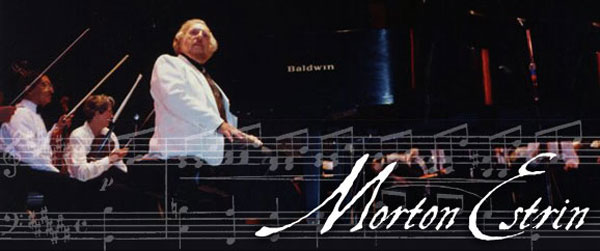
Morton Estrin – Celebration of Life – 1923-2017

This is the time to celebrate the life of my father, Morton Estrin who was a world renowned concert pianist, recording artist, and master teacher. His uplifting spirit will be missed.

My father knew early in life that he had found his passion, and would devote his life to the piano. His influence in the world of music has been far-reaching from producing a musical dynasty within his own family, to the legacy he passed on to his countless private students as well as being distinguished professor of music for over 50 years at Hofstra University. A good number of his students have achieved prominence and fame in their own right including John Mauceri, Deborah Gibson, Jeffrey Biegel and Billy Joel.

My father was known for his mastery of some of the most demanding music in the piano literature. He performed the complete Preludes of Rachmaninoff at Lincoln Center. His historic first ever recording of the Scriabin Etudes opus 8 earned “Record of the Year”. He continued learning and performing music including the massive Mussorgsky, “Pictures at an Exhibition” when he was in his eighties.

My father enriched me with a foundation in music encompassing all aspects of artistry from mastering the piano, to developing my musicianship with his clear, concise teaching which I have shared and continue sharing to people personally and through media. We all owe a debt of gratitude for the giving nature of one of the great pianists of the Romantic tradition which lives on in his recordings as well as the thousands of students who continue sharing the great insights and passion for music my father offered.


Scriabin Etude opus 8 No. 12 in D-sharp minor

This is the last of the 12 etudes opus 8 of the great Russian composer, Alexander Scriabin. My father was the first to record the complete set of the opus 8 etudes which garnered rave revues as well as record of the year. The Russian tradition of his heritage and musical lineage is evident in the performance of these magnificent works.

Rachmaninoff Prelude Opus 32 No. 5 in G-major

My father had massive hands and could reach spectacular heights with his tremendous strength reaching the last row of the largest concert halls. But he also had the utmost delicacy in his playing which is evident here in this gem of a work, the Prelude in G-major from the Opus 32 Preludes. You can listen to the complete set which is available on YouTube.

Brahms Rhapsody in G minor, Opus 79 No. 2

While my father had a great affinity for Russian composers, his interpretations of Beethoven and Brahms had epic architecture so rarely heard. This is the famous G-minor Rhapsody. His Brahms album used to be a favorite of radio stations around the country and throughout the world. My sister and I would delight in going to record stores and finding the bin with all of my father’s records!

Schumann Symphonic Etudes

One of the trademarks of my father’s performances was his command for extremely large works. While the Symphonic Etudes are essentially a set of theme and variations, in his hands the music has an architecture which makes the whole greater than the sum of the parts – not just a bunch of technical achievements (although it is that!), but a cohesive performance that has great meaning and emotion far beyond just playing the notes. This was a single take from a recording session of this piece that never got released. All I had was an audio cassette of the session. So, there is absolutely no editing in this performance.

My Father’s Steinway

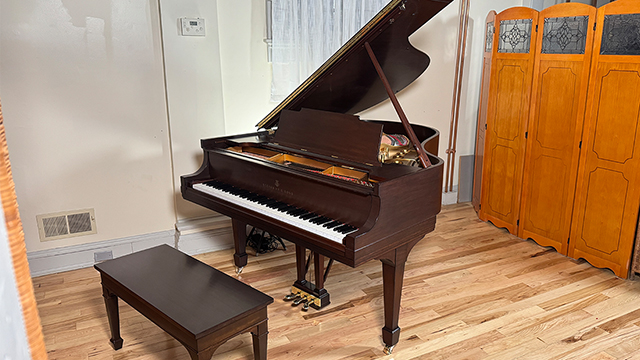
This past year has brought many people and pianos together. But there is one that is set apart from the rest – my father’s Steinway. When my sister Coren and I were in high school, my father bought a new Baldwin 7-foot grand piano. So, my father’s Steinway baby grand (model S) went upstairs for us to practice on. This instrument had great sentimental attachment for my father. His father bought it for him in 1939 for $900 on credit. There were many times the struggle to make those payments cast in doubt keeping the piano.

When I moved from New York to study piano with Ruth Slenczynska in the Midwest, my father let me take the piano with me. Eventually, I lived in a home that had a piano. So, the piano went to my sister. My father gave the piano to my sister with the stipulation that one day she would have it restored to its original glory.

Flash forward several decades, this year that day came. Little did I know all those years ago that I would be the one responsible for the rebuilding of the piano! I got to live with this little gem of a piano for some time while working closely with our technicians refining it to a high level.

Just before it left, something motivated me to sit down and play my father’s Steinway. It was an unplanned, spontaneous inspiration that is recorded as a tribute for the honor of having been entrusted with this awesome responsibility. This is for you Dad – and Coren!