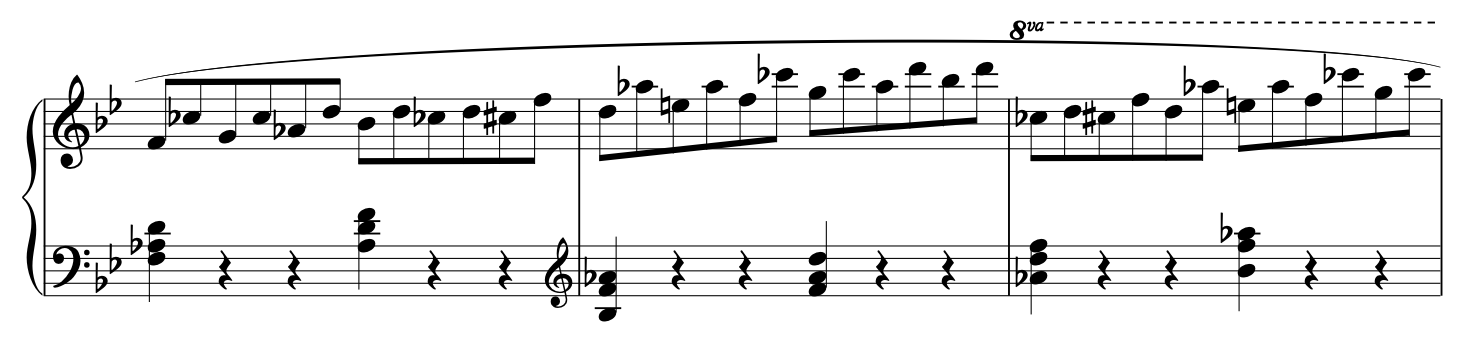
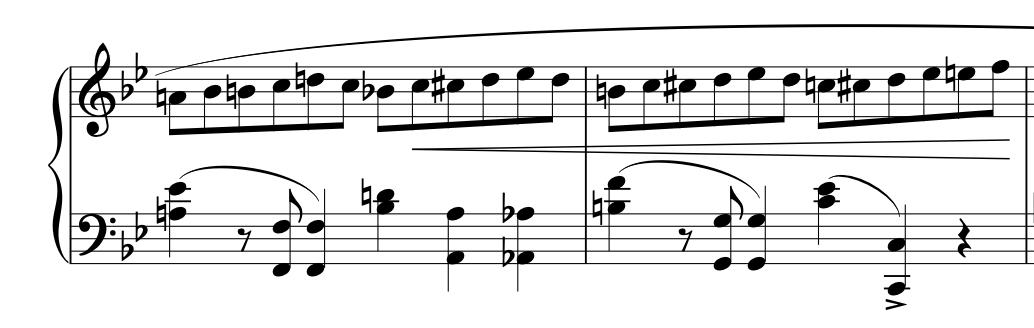
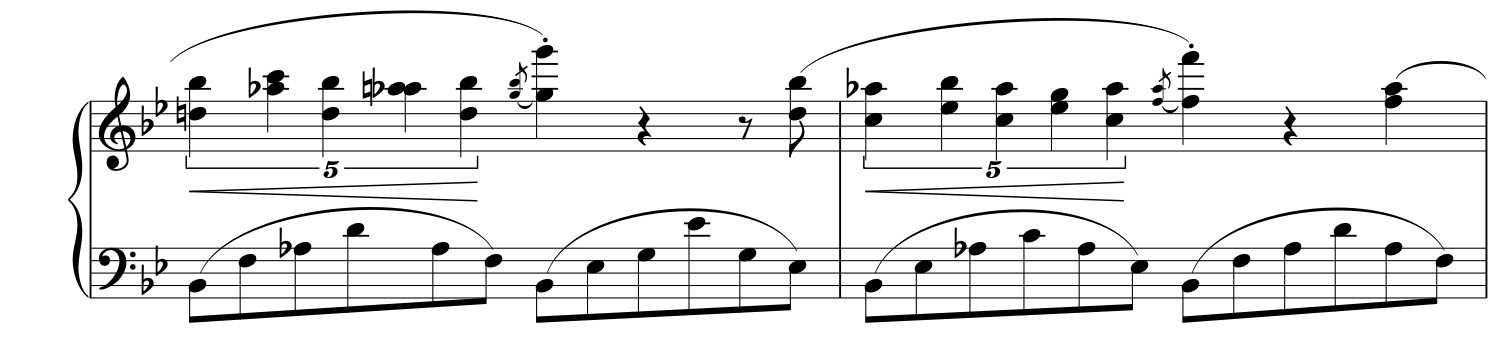
Over the years I’ve made a lot of videos about pianos and practicing piano. Today I’m going to provide a concise list of some areas to focus on during your development as a pianist and give some examples of past lessons you can refer to. 1. Memorize, Memorize, Memorize! One of the most important aspects to practicing the piano and developing as a musician is to spend time on a regular basis memorizing music. I can’t stress enough how important this is and how it is often neglected. Any pianist specializing in solo classical music must spend a vast amounts of time memorizing music. The amount of music in the world is endless and nobody can memorize all of it. But if you spend time on a daily basis memorizing music, you will develop security and mastery of performance. Not only will you expand your repertoire, you’ll be giving your brain a workout and you will spend more time focusing on how to play your music rather than what you have to play.

2. Sight Reading Sight Reading is another crucial element to your development as a pianist and is another topic that is often overlooked. Wouldn’t it be great to explore new repertoire and try it out before you commit a significant amount of time learning it? That’s where sight reading becomes incredibly beneficial. Developing your sight reading is very important and if you work on it regularly, you will continually improve.

3. Playing With Other Musicians Playing music with other musicians is not only fun, it’s a necessary experience in developing your own skills. Even if your primary interest is playing solo piano, you should seek out opportunities to play with other musicians and do it as often as possible. There is no need to be intimidated by playing with musicians who are better than you are. In fact, this is one of the best ways to advance your scope as a musician. Even if they play other instruments, examining their sense of style, phrasing, timing and other aspects of their playing can help you develop a new depth of understanding to music. Sight reading might be incredibly difficult on your own as you will find yourself starting and stopping when you make mistakes. When you sight read with other musicians, you will be forced to recover and you won’t be able to stop playing. It forces you to become a better at sight reading!

4. Improvise Often and Don’t be Afraid to Explore New Styles of Music Improvising is so important to understanding your music and gaining a new depth of understanding about how it’s constructed. Many styles of music such as rock and jazz rely on improvisation as a key element to the music and encourages musicians to create something new and interesting every time they perform. Developing your improvisation skills (even with classical music) is a crucial element to becoming a better and more well-rounded musician. Exploring new styles of music enables you to experience and understand styles you might not have been aware of; it can also be a great deal of fun! I’m a classical pianist but when I’ve been at parties with other musicians and played blues music, it’s been a great deal of fun and an incredible learning experience to improvise with them and learn how they approach music. Improvising is also a universal language. If you learn how to read a lead sheet for jazz standards, you can take that anywhere in the world, to play with any musicians. Spoken language is not a barrier for musical performance!

5. Practice Mentally This is something that people might not ever think of. Practicing mentally away from your instrument can offer benefits not possible while playing your instrument. Playing music requires a thought process and there are tremendous benefits to thinking through your music. Let’s say you’re waiting in line at the grocery store. You can practice your music mentally by thinking through a piece with every nuance of performance without any physical restrictions. Going through your music when you are away from your instrument allows you to think about it in a different light. Naturally, practicing with your instrument is essential, but you may rely on motor memory rather than the music. Practicing mentally allows you to think through your music playing it exactly as you want. This can have tremendous benefits strengthening your memory. Just play through your music in your mind and see how far you get. You can always refer to the score to clarify the comprehension of the score.

HOW TO MEMORIZE MUSIC

This might sound like a silly question but sometimes you have a piece you can play with the music in front of you but you haven’t memorized it yet. You might be able to play the whole piece by barely glancing at the music but you still need it in parts. This can be cumbersome and is something you want to avoid. So how do you fix this? I have produced a video in the past on How to Memorize Music. If you haven’t watched it yet I highly recommend it as a companion piece to this article. My very first lesson as a child when I studied with my father Morton Estrin was how to memorize music. It’s a crucial skill that every musician should learn. Taking small sections of music and memorizing each hand separately, then putting them together helps you memorize even the most difficult passages of music. This is a great system to use but how do you account for a piece you almost have memorized? How can you push yourself over the edge and get the whole piece down? I actually have two methods for you. The first is the band-aid approach to practicing music. This technique is simple but very effective. Play through the piece as far as you can from memory. When you encounter a spot that you can’t go past without looking at the music, you stop. Then take this small section and study it intensely. Use the method I detailed above and learn each hand separately first to get the section memorized securely. If the band-aid approach doesn’t work for you don’t worry; you have other options. Rather than starting all over again and learning small chunks at a time, expand the amount of music you learn for each section. So where you might have been memorizing 3-4 measures at a time, try and work with 8-10 measures at a time. Make sure you learn the hands separately and then combine them together. I highly recommend that in the future you start by memorizing your piece as the first step and not the last step. Start by progressing through your music in small chunks and learn each hand separately; then combine them when you’re ready. Ultimately this is a much more efficient way to learn your music.

DO PIANISTS SLOW WITH AGE?

This is a very interesting question. We know as people get older their mobility may suffer and their minds can potentially slow down. But how does this affect their ability to perform music? Today we are going to discuss this and the answer might surprise you! You might think that a performer would naturally slow down with age – but this isn’t always the case. When it comes to prodigies, they tend to play very quickly when they are young, but as they mature they begin to take more time with the music. This is not a case of slowing down due to physical limitations, but as a way to express the music on a deeper level. They learn to express themselves with every note instead of rushing through the music almost like a sporting event. The technical side is one thing, but there is a whole other aspect of why you might find yourself slowing down your playing as you get older. If you take a piece you know very well, you may have played it hundreds or even thousands of times – and to you it might seem slow because you know every single note of it inside out. While it might seem “slow” to you, for your audience, they must digest the music for the first time. They might be overwhelmed by the volume of music to digest. As you mature as a musician, you appreciate what it is like for people to listen to a piece they are not familiar with. Age is not always an indicator of the speed of a musical performance. I’ve heard older pianists who play very fast and younger pianists who play much slower. Sometimes personalities come into play. Often times the differences between professional musicians and talented students are the tempos they take – and this doesn’t mean that more accomplished artists play faster or slower than students. For example, many times, less experienced players will play slow movements much slower than what works, which bogs down the performance, losing the pulse which keeps the music alive. It takes experience to understand how to get these sections to flow and sound natural. Generally, older musicians tend to play slower. But I don’t believe it has anything to do with mobility and age, it’s much more a product of learning how to play expressively.

The Ultimate Guide to Transform Your Piano Playing in 2026

Over the years I’ve made a lot of videos about pianos and practicing piano. Today I’m going to provide a concise list of some areas to focus on during your development as a pianist and give some examples of past lessons you can refer to. 1. Memor

Welcome to LivingPianos.com. I’m Robert Estrin. Today we are talking about a seminal question: whether it is better to buy a new Steinway or a vintage Steinway. You might wonder why anyone would buy a 100 year old piano instead of a brand new one. I get this question all the time, and technicians debate it endlessly. Some say old pianos are junk. Others say they do not make them like they used to. So who is right? Let’s break it down.

The Wood Makes a Difference

The first point is the wood. In the 1920s and 1930s, and even earlier, piano makers had access to old growth wood. Today, most woods are plantation grown. Older woods tend to have tighter grain, which produces greater resonance and depth of sound. There are even major challenges now in obtaining Sitka spruce from Alaska, which is protected. This has created a real crisis in sourcing the finest tonewoods that were once commonly available to piano manufacturers.

Hand Building Versus Machines

Another important factor is how pianos are built. Modern pianos rely heavily on CNC machines, which stands for computer numerical control. These machines are incredibly consistent and precise. Vintage pianos, on the other hand, were hand built. Each one has its own individual personality. When you find a good vintage piano, it has a soul that machines simply cannot replicate. That individuality is something many pianists find irresistible.

The Golden Age of Piano Manufacturing

If you go back to the period before World War Two, there were over one thousand piano companies in operation. Only about 300 or 400 of them were full scale manufacturers, with the rest being smaller assemblers or short lived firms. Still, it was the heyday of piano manufacturing in America. Compare that to today, when only a couple of companies are producing perhaps two or three thousand pianos a year. It was truly a different era.

Why Old Pianos Can Be a Problem

Here is where many people get burned. Pianos are not violins. Violins tend to improve with age, but pianos are machines that wear out. Old strings, cracked soundboards, and worn actions mean that many vintage pianos are essentially furniture unless they are properly restored. To unlock the magic, restoration is essential.

The Hybrid Solution

The solution is a hybrid approach. For example, my piano is a Steinway Model S that my grandfather bought for my father in the early 1940s. It was built in the late 1930s, and it has since been completely rebuilt. You get the original rim, the case, and the structural elements that cannot be replaced. If you are lucky, you also retain the original soundboard, which can be resurrected to produce a magnificent tone. All of the action parts can be rebuilt using Steinway or Renner components. Hammers might be from Steinway or Abel, depending on what is most appropriate for that particular piano.

This is why it is critical to work with a rebuilder who truly understands pianos. Not every Steinway performs best with current Steinway parts, even though Steinway now owns Renner. When done correctly, you can install new strings and a new action while preserving the tonal beauty of old growth wood. This approach gives you the stability of a new piano combined with the tone of aged wood. You can hear a beautiful pianissimo and a gorgeous, singing sustain. That is what people mean when they talk about singing wood from old growth forests. You also get tremendous power and a deep bass growl that is hard to find in most new pianos unless you are spending well into six figures on top tier instruments.

What About Consistency?

One advantage of buying a new piano is consistency, and that is generally true. However, new pianos also have a break in period. During the first couple of years, strings stretch, felt parts settle, and everything gradually seats into place. So the real question is whether you can hear the difference. Listen to Asian production pianos. Listen to new Steinways. If you have tried new Steinways, how do you feel they compare to vintage instruments? I would love to hear your thoughts. Leave a comment at LivingPianos.com, we are Your Online Piano Store!

Also see: New Vs. Vintage Steinway – What They DONT’T tell you:

New vs Vintage Steinway: Which Is Better?

Welcome to LivingPianos.com. I’m Robert Estrin. Today we are talking about a seminal question: whether it is better to buy a new Steinway or a vintage Steinway. You might wonder why anyone would buy a 100 year old piano instead of a brand new o

Welcome to LivingPianos.com. I’m Robert Estrin. I have a really interesting show for you today. We’re going to be comparing a vintage Steinway concert grand to a much newer Steinway concert grand and listening to the difference. We’ll hear two excerpts of Chopin on these two instruments. Many people have very strong opinions about older versus newer Steinways, and today is a chance for you to listen and decide for yourself.

A Modern Steinway Concert Grand

First up, we have a 2004 Steinway concert grand. It’s all original and barely used. You’ll hear a performance of Chopin’s F-sharp Nocturne on this piano. Take a moment to listen and notice the tone. The piano is dialed in and a pleasure to play, with a clean, responsive sound.

A Vintage Steinway Concert Grand

Next, we turn to a vintage Steinway concert grand from 1916. It has been carefully rebuilt and retains its original soundboard, so the comparison is fair. Here, you’ll hear Chopin’s B-flat minor Nocturne. Listen to the tone and see which piano resonates with you more.

What Makes Each Steinway Unique

No two Steinway concert grands are exactly the same. Each is hand-built, and the woods used throughout the piano are unique because no two trees are alike. Beyond that, every piano benefits from the fine craftsmanship of its makers. Still, there is a general distinction between older and newer Steinways that you can often hear.

Join the Conversation

I’m curious if you can hear the difference between these two pianos. Let’s get a conversation going in the comments here at LivingPianos.com. I’d love to hear your thoughts. Again, I’m Robert Estrin, and thanks so much for joining me!

New vs. Vintage Steinway: What They Don’t Tell You

Vintage vs New Concert Grand Steinway: Can You Hear the Difference?

I have a really interesting show for you today. We're going to be comparing a vintage Steinway concert grand to a much newer Steinway concert grand and listening to the difference. We'll hear two excerpts of Chopin on these two instruments. Many peop

Johann Sebastian Bach is the grandmaster of counterpoint and arguably the most influential figure in Western music history. But for many pianists, approaching his works can be intimidating. From the intricacies of the fugue to the controversy of using the sustain pedal, understanding the logic behind the notes is the key to mastery.

In this video compilation, we explore the history, theory, and practice techniques required to bring Bach’s music to life, culminating in a full performance of his Toccata in E Minor.

The Well-Tempered Clavier: A Tuning Revolution 00:21

To understand Bach’s 48 Preludes and Fugues, you must first understand the term “Well-Tempered.” In the early 18th century, keyboard instruments used specific tuning systems that sounded pure in some keys (like C or G major) but sounded horrendous in distant keys (like F# or C#).

Technicians eventually developed a “well-tempered” tuning—a compromise that allowed all keys to be playable without re-tuning the instrument. To celebrate this technological breakthrough, Bach wrote a prelude and fugue in every single major and minor key—twice.

The Chorale Connection 04:14

While Bach’s preludes and fugues can sound incredibly complex, they share a DNA with the simple four-part chorale. Whether it is a dense fugue or a rapid prelude, the music is fundamentally built on the voice leading of Soprano, Alto, Tenor, and Bass.

When you strip away the ornamentation of a prelude, you often find the same harmonic structure used in hymn writing. This structure didn’t just stop with Bach; it forms the foundation for Beethoven, Brahms, and almost all Western music that followed.

The Great Debate: Should You Use Pedal in Bach? 11:31

Bach never wrote for the modern piano; he wrote for the organ and other keyboard instruments (clavier) that did not have sustain pedals. This leads to a debate: Purists say “no pedal,” while modernists argue Bach would have loved the color it adds.

** The Verdict:** You can use the pedal, but not the way you use it in Chopin.

Chopin: You use the pedal to connect notes that your hand cannot physically reach.

Bach: There are no notes written that the fingers cannot hold. Therefore, pedal should be used only for color, not for legato.

Practice Tip: Practice all Bach pieces without any pedal first. Once your fingering and connections are secure, add small touches of pedal for warmth.

The Secret Power of “Extreme Slow Practice” 17:38

If you have a piece that is feeling rusty, or one you can’t quite get to a professional level, extreme slow practice is the solution. When you play fast, imperfections blur by. When you play extremely slowly, it is like putting your playing under a microscope.

This technique forces you to be deliberate. It moves you off “autopilot” and forces your brain to re-engage with the score, solidifying your memory and security.

Why is the “Italian Concerto” a Concerto? 22:09

A concerto is defined as a soloist (or group) playing with an orchestra. Yet, Bach’s Italian Concerto is for solo keyboard. How does that work?

Bach utilized the “Italian Style” of the Concerto Grosso by writing specific dynamics into the score. He created the illusion of an orchestra by juxtaposing loud (forte) sections representing the full orchestra (tutti) against soft (piano) sections representing the soloist.

Anatomy of a Fugue 25:35

A fugue is a composition based on counterpoint—the interweaving of independent melodic lines. It is similar to a “round” (like Row, Row, Row Your Boat), but far more complex.

The Subject: The main musical theme.

The Answer: The subject repeated in a different key (usually a 5th higher).

The Counter-Subject: The melody played simultaneously with the answer.

Bach manipulates these themes using mathematical precision—playing them upside down (inversion), backwards (retrograde), or at different speeds.

Performance: Toccata in E Minor (38:02)

To truly understand the emotional power of a fugue, you must hear it in context. We end this video with a performance of Bach’s Toccata in E Minor. It is an emotionally charged work that concludes with a brilliant three-voice fugue.

While the analysis is fascinating, remember the most important rule: Listen to enjoy. You don’t need to analyze every measure to feel the awe of how these separate lines weave together to form a magnificent whole.

Bach’s Fugues and Concertos Explained: The Complete Practice Blueprint

Johann Sebastian Bach is the grandmaster of counterpoint and arguably the most influential figure in Western music history. But for many pianists, approaching his works can be intimidating. From the intricacies of the fugue to the controversy of usin

Today you are going to learn about the biggest piano practice mistakes you may not even realize you are making. Most pianists spend years practicing harder and harder and still do not get better. In almost every case, it comes down to one hidden mistake. Virtually all students make it, including intermediate and advanced players. If you have ever wondered why your playing seems stuck, this is likely the reason.

What Most Pianists Think Practice Is

Many pianists think practice means logging hours at the piano, playing pieces from beginning to end, and hoping consistency will come with time. Unfortunately, this kind of practice often reinforces problems instead of solving them. The biggest mistake is mindless repetition. Practicing by repeating rather than problem solving is the number one reason pianists fail to improve.

Why is this so damaging? Errors turn into habits. Awareness disappears. Tension creeps in. And enormous amounts of time are wasted. From a neuroscience standpoint, neural pathways do not know the difference between right and wrong. They only know what you repeat.

Why Starting at the Beginning Every Time Does Not Work

One of the hidden practice mistakes people often make is always starting from the beginning of a piece. It feels comfortable because it is the part you know best. You get the illusion of progress by playing what already sounds good. But this avoids confronting the weaknesses that give practice its value. The result is predictable. The beginning improves, the middle stays about the same, and the ending barely improves at all. You polish the opening until it is smooth, reach a difficult passage, and suddenly everything falls apart. Because it is not fun to play what sounds bad, you avoid the very sections you should be practicing. Your brain rewards familiarity, not progress. That is why this approach feels productive even when it is not.

The Fix: Practice Small Sections and Start Where It Is Hard

Instead of starting at the beginning, focus on what actually needs work. Sometimes that means starting from the hardest passage. If you have played the opening a hundred times and the rest is not improving, begin your practice right where the problems are and master even a tiny section completely.

Another Big Mistake: Practicing Too Fast

Practicing too fast is another major problem. If you cannot play a passage securely at a given tempo, practicing it fast only burns sloppiness and tension into your playing. It is tempting because it is exciting and you want to hear the piece at speed right now. But hoping it will magically clean itself up never works. Do not confuse tempo with mastery. Speed will come naturally once you have solidity and control. If you can play something slowly with security, you can gradually increase the tempo. Playing faster than you can play accurately destroys progress because you are reinforcing errors.

Why Bad Habits Are So Hard to Fix

Once tension and sloppy motions are ingrained, they become extremely difficult to eradicate. My wife Florence, who teaches flute, sees this all the time. Students trained from the beginning can develop a beautiful, relaxed sound. Students who come with years of tension often struggle to undo it. Your hands memorize motion patterns, correct or incorrect. That is why you must never allow sloppy, tense playing to become routine.

Slow Practice Works

If you play a passage too fast and think you can fix it by repeating it again and again, stop. Instead, take a very small section and practice it slowly and securely. At first, slow practice can feel harder because it exposes what you do not really know. But this is exactly what allows you to clean up imprecise finger patterns and achieve a beautiful sound.

Stop Avoiding Your Weaknesses

It’s easy to play through a piece while glossing over the parts that give you trouble. But avoiding weaknesses guarantees they will never improve. Isolating problem spots is uncomfortable, but it is essential if you want real progress. Many people have emotional resistance to this. Your ego would rather play the parts that sound good. But what really happens is your worst measures never improve, your tension builds, and the piece hits a progress wall.

Diagnose the Problem Before You Try to Fix It

To fix any problem, you must first diagnose it accurately. Often the first thing to check is fingering. Look carefully at what is written in your score. If the fingering does not work, explore alternatives. A great resource is IMSLP.org, which offers many editions of the same music with different fingerings. Sometimes a new fingering solves a problem instantly!

Another factor is motion. Practice just the leaps or just the difficult movements. Stop before the note you tend to miss and rehearse the motion itself. You can also use rhythmic practice to improve coordination. Coordination issues often come from the hands not being precisely together. Practice stopping just before both hands play to ensure exact alignment. Balance between the hands is another major issue. Do not be afraid to exaggerate the melody. Use arm weight to project a singing tone. You can always refine later, but first establish clarity and balance.

Always Put It Back in Context

After fixing a problem in isolation, always put it back into the musical context. Practice is not just about solving problems. It is about reintegrating them into the piece. Good practice is problem solving. Work on small sections. Analyze instead of rushing. Control instead of speed. Attack weaknesses directly. Even if you spend a lot of time on a very small amount of music, the benefits are enormous because solutions transfer to other sections.

A Simple 10 Minute Daily Practice Routine

For the first one or two minutes, warm up with something simple like scales. Keep shoulders relaxed, fingers rounded, and motions economical. Warm up thoughtfully, not mechanically.

For the next three to five minutes, identify one problem spot and isolate it. Solve it thoroughly, even if it feels difficult at first.

For the next few minutes, continue working on difficulties using slow practice or rhythmic variations.

In the final minute or two, reinforce your work with a clean, relaxed playthrough of just the section you fixed.

Practice With Intention, Not Just Repetition

Simply repeating a passage over and over does not guarantee improvement. Mindless repetition often reinforces mistakes. Practicing with intention means identifying the problem, isolating it, and working on it carefully until it is solved. Focus on one issue at a time rather than trying to fix everything at once. By practicing deliberately and thoughtfully, even small daily improvements will compound into dramatic progress.

What part of your pieces have you been avoiding? Leave a comment and I will help you diagnose it. I read your comments and take them seriously. I hope this helps you. Again, I am Robert Estrin. This is LivingPianos.com, Your Online Piano Resource.

The Biggest Piano Practice Mistakes You Don’t Realize

Today you are going to learn about the biggest piano practice mistakes you may not even realize you are making. Most pianists spend years practicing harder and harder and still do not get better. In almost every case, it comes down to one hidden mist

Here is a fascinating topic that brings together physics, instrument health, and human physiology. A viewer named Jon, from Houston, wrote a great question about wintry weather and its effects on both pianos and pianists. Having moved from Southern California to Cleveland myself, I can tell you the adjustment to cold climates is significant. Jon asked what happens when a piano sits near a big glass window where a cold air downdraft pours down. How does this affect tuning, the soundboard, the action, and even our ability to listen and play when we’re cold?

The Science Behind Downdrafts

Jon used a keyword: downdraft. Many people love the look of a grand piano in a bay window, but there is real science that explains why this is dangerous. It all comes down to convection. Glass becomes cold during winter. When warm air hits that cold surface, it instantly cools. Cool air is heavier, so it sinks. This creates a continuous convection current, a literal waterfall of cold air cascading over your piano at all hours!

Why Cold Air Damages Pianos

It isn’t just the temperature that does the damage. The real culprit is humidity, or more accurately, the lack of humidity. Cold air cannot hold moisture, so that invisible waterfall is actually a steady stream of extremely dry air. When it hits the soundboard, the wood shrinks. The crown, that subtle arch responsible for projection and tone, begins to flatten. The result is loss of sustain, loss of power, and a deadened tone.

Worse yet, the two sides of the piano experience different environments. The window side becomes cold and dry, while the room side stays warmer and more humid. This uneven exposure can cause the soundboard to warp, throwing the tuning not just flat but chaotically out of alignment.

Effects on the Piano Action

The thousands of moving parts inside a piano are made of wood, felt, and metal. Felt bushings create controlled friction at pivot points, but in the cold they stiffen and harden. This results in sluggish action. You may notice in winter that keys don’t return as quickly and the whole instrument feels resistant. That’s the felt reacting to dry, cold air.

Can Pianists Play Well When They’re Cold?

Cold hands are more than just uncomfortable. When we’re cold, our bodies conserve heat by sending blood to the core, leaving our hands with reduced circulation. The small interosseous muscles between the fingers stiffen, and the synovial fluid that lubricates the joints becomes thicker. This increases internal friction in the knuckles, making fast or intricate playing physically impossible. And if you’re shivering, your concentration and critical listening ability suffer too.

Protecting Your Piano and Your Hands

Heavy drapes or thermal curtains can help reduce cold drafts, but the best solution is to move the piano away from the window. Don’t let a beautiful view compromise the health and tone of your instrument!

For your hands, a simple and effective strategy is to run them under warm water before practicing. Not hot, just warm enough to promote circulation and help the synovial fluid flow freely. This small step can make a tremendous difference.

Thanks for the great question, Jon! Keep your pianos warm and properly humidified, and keep yourselves warm as well. Your piano and your playing will both benefit.

I hope this is helpful for you! Share your thoughts in the comments here at LivingPianos.com, Your Online Piano Resource and on YouTube.

The Dangers of Cold Drafts for Pianos and Pianists

Here is a fascinating topic that brings together physics, instrument health, and human physiology. A viewer named Jon, from Houston, wrote a great question about wintry weather and its effects on both pianos and pianists. Having moved from Southern C

Welcome to LivingPianos.com. I’m Robert Estrin. Today, we’re exploring the question: What if Beethoven had YouTube? At first it might seem like a frivolous idea, but there are profound implications here. Beethoven would have had exposure to music from all over the world. What would that have done for his compositions? Composers were so isolated in those days. Sure, they made every effort to learn the great works of others, but with YouTube, we literally have the world’s music in our pockets at the click of our fingers.

Global Access and Musical Innovation

Think about all the other composers around the globe who might have created far greater works if they had been able to hear the masterpieces clustered in Austria and Germany—Mozart, Haydn, Beethoven, and Schubert. Access to all those works could have dramatically reshaped music history. Bach is a key example. He didn’t travel much, but he made an effort to attend concerts by any musicians who came to his home in Leipzig, Germany. Through that effort, he was able to compose in the Italian, English, and French styles, creating phenomenal music.

If you know a lot of Bach’s works, you realize just how unique his Italian concerto is. He also embraced the English and French styles, as you can hear in his Suites. These styles are dramatically different from one another. Imagine the exposure he could have had to Spanish music or the music of the Americas. Even so, he produced fantastic compositions simply by attending concerts and learning from others.

Beethoven and the World of Music

Now imagine Beethoven with access to all the musical styles and cultures around the world. The possibilities are staggering. Composers of his time lived in relative isolation. Franz Schubert was obscure to the world until after his death! You can see a parallel in the early 20th century. Listen to recordings of pre-World War II artists like Rachmaninoff, Hofmann, Paderewski, Levine and other pianists from that age. They all had dramatically different styles from one another. With recordings, musicians could hear each other, and today, everyone can hear everyone, and performances have become more homogenous. Listening to those old recordings, even with the scratchy sound, you can hear individuality that far surpasses the variety of performances today.

More Creativity or More of the Same?

Would the presence of YouTube in Beethoven’s time have created more homogeneity, or would it have inspired the same kind of individuality and variety we hear in Bach? In the 20th century, the Beatles provided a great example of global musical influence. George Harrison studied with Ravi Shankar, the great Indian musician, and you can hear that influence in songs like Within You, Without You. Their music reflects a fusion of styles from around the world.

Creativity or Distraction?

So here is the question I leave you with. If YouTube had existed in Beethoven’s time, would it have sparked more creativity through exposure to new sounds and styles, or would it have led composers to sound more like each other? The answer is unknown, and it is fascinating to ponder. One last thought: if YouTube had been around, would Beethoven have spent too much time doom scrolling and not enough time composing these great works? These are the kinds of questions I think about when imagining this alternate history. Let me know your thoughts about this in the comments here at LivingPianos.com and on YouTube!

Beatles: Within You Without You

Ignacy Paderewski plays “Menuet” in G

Josef Hofmann

Sergei Rachmaninoff

Josef Lhevinne

What if Beethoven had YouTube?

Welcome to LivingPianos.com. I’m Robert Estrin. Today, we’re exploring the question: What if Beethoven had YouTube? At first it might seem like a frivolous idea, but there are profound implications here. Beethoven would have had exposure to m

Today, we’re exploring the three main types of pianos—digitals, uprights, and grands—and what makes each one unique. By the end, you’ll have a clearer idea of which piano might best suit your needs and lifestyle.

Digital Pianos: Affordable, Versatile, and Convenient

You might be surprised at how good modern digital pianos sound. Technology has come a long way, and for under $1,000, you can find a digital piano with a realistic weighted action and a convincing nine-foot concert grand sound. These instruments often feature graded keys that feel lighter on top and heavier on the bottom, just like an acoustic piano.

One of the greatest advantages of digital pianos is convenience. They never need tuning, they’re portable, and you can play silently with headphones, which is perfect if you live in an apartment or want to practice late at night. Many models connect easily to computers for music education, recording, and sequencing software.

Digital pianos also come in a wide range of models. Entry-level instruments are ideal for beginners or travelers, while advanced hybrid pianos—combining digital sound with real piano actions—can cost $10,000 or more. Some even look like grand pianos and offer sophisticated features for orchestrating and layering sounds. Still, despite their many strengths, digital pianos can’t fully match the feel and tonal complexity of an acoustic instrument. The sound from a real piano’s soundboard has a resonance and organic quality that even the best speaker systems can’t reproduce. If that living, breathing experience is what you crave, an acoustic upright might be your next step.

Upright Pianos: The Classic Home Instrument

Upright pianos, like the popular Yamaha U1, provide a genuine piano experience in a compact design. They offer a responsive action, beautiful tone, and a piece of furniture that fits nicely in most homes. However, uprights do have some limitations. Since the hammers strike the strings horizontally rather than vertically, repetition speed is slower than on a grand piano. Advanced players will find certain techniques are not possible on an upright.

Pedals on upright pianos also differ from grands. While the right sustain pedal functions the same, the middle pedal often acts as a practice mute rather than a sostenuto pedal. This can be handy for quiet practice, but it limits some of the expressive possibilities needed for certain classical works. The left pedal, too, doesn’t shift the action as it does on a grand. Instead, it moves the hammers closer to the strings, which makes it harder to play loudly, changing only the touch but not the tone.

Upright pianos are an excellent choice if you’re short on space or budget. They provide a satisfying, organic playing experience, though they lack the full expressive range and repetition speed of a grand.

Grand Pianos: The Ultimate in Expression

Grand pianos offer unmatched control and tonal beauty. Their horizontal action uses gravity to reset the hammers, allowing for faster repetition and greater nuance. Even a modest baby grand, such as a five-foot-seven-inch Steinway Model M, produces a rich tone and refined responsiveness that can elevate any performance.

As pianos grow in length, their tone deepens and the resonance expands. Larger grands, around six feet or more, develop a lush sound, particularly in the middle register where notes gain fullness and character. When you press the sustain pedal, the strings sympathetically vibrate, creating a reverberant sound chamber that envelops you in tone. Of course, grand pianos require more space and a larger investment. But for serious players, they offer the full range of dynamics and expressive control that no other piano type can match.

Choosing the Right Piano for You

To sum up:

  • Digital pianos are great for portability, affordability, and modern connectivity.
  • Upright pianos deliver a true acoustic feel in a compact form, perfect for many homes.
  • Grand pianos provide the ultimate experience in tone and touch, ideal for advanced players as well as providing an elegant statement in your home.

When choosing, think long-term. Pianos are not something you’ll want to trade frequently. Find one that fits your space, your budget, and your musical goals, and it will reward you for years to come. If you’d like to hear how each piano sounds, you can watch the accompanying video to experience the demonstrations firsthand.

Thank you for joining me here at LivingPianos.com. If you have any questions or would like personal guidance in choosing a piano, don’t hesitate to reach out. I’m always glad to share my experience and help you find the perfect instrument. You can email me anytime at Robert@LivingPianos.com.

The 3 Types of Pianos: What’s Best for You?

Today, we’re exploring the three main types of pianos—digitals, uprights, and grands—and what makes each one unique. By the end, you’ll have a clearer idea of which piano might best suit your needs and lifestyle. Digital Pianos: Affordable, V

Welcome to LivingPianos.com. I’m Robert Estrin. Today I’m going to show you how to play Chopin’s most famous nocturne, the Nocturne in E-flat Major, with real expression. It’s one of the most beloved piano pieces ever written, and there are some special techniques that will help you bring out its beauty.

Balancing the Hands

One of the greatest challenges in this piece is achieving balance between the hands. The melody must always sing above the accompaniment. To do this, use the weight of your arm in the right hand while keeping your left hand very close to the keys. The left hand should use the smallest possible amount of arm weight. If you let the left hand move too much, it will become too loud no matter how softly you try to play. Staying close to the keys keeps the left hand subdued while allowing the right hand to project the melody. Even though the piece is quiet, the melody must still carry energy and intensity. Concert pianists use a surprising amount of controlled weight in the right hand to achieve a rich, expressive tone. If you simply press with your fingers, the sound will be thin and harsh. Transferring the weight of the arm smoothly from key to key lets you produce a full sound without losing the sweetness and lyricism that define this nocturne.

Practicing the Left Hand

After playing the initial low note in the left hand, get your hand positioned over both of the chords that follow. You can even practice this by playing the chords together, so your hand learns to stay close to the surface of the keys. Being directly over the chords means you can play with minimal effort and maintain control over the balance.
Shaping the Phrase

Balance isn’t just vertical between the hands; it’s also horizontal across time. The melody must have shape. Most phrases rise toward the middle, reach a peak, and then gently fall away. Think of how a singer or wind player shapes a line in one breath, letting the sound rise and fall naturally. If every note is played at the same volume, even with perfect balance, the music will sound flat and lifeless. Instead, let each phrase rise and fall naturally. Build up to the middle of the phrase, then relax as it resolves. This ebb and flow gives the music a natural breath and flow.

Using the Pedal

Take care in using the pedal. It’s really an art to bring out the bass line and the chords without blurring the harmonies together. As the harmonies change, you must adjust the pedal, capturing those deep bass notes while keeping the inner chords and melody distinct. Done well, this creates the effect of almost three separate voices: the bass notes, the accompanying chords, and the singing melody. Capturing the bass notes with the pedal adds depth and richness to the overall sound, giving the piece its characteristic warmth and resonance.

The Art of Rubato

Rubato, the slight flexibility of tempo, is central to Romantic-era music like Chopin’s. A little speeding up and slowing down gives life to the music. It isn’t appropriate for composers like Bach or Mozart, but in Chopin it’s essential!

The key to good rubato is that you never actually gain or lose time overall. You stretch a little here and give it back there, like breathing. If you play the nocturne strictly in time, it sounds mechanical and lifeless. A touch of rubato draws the listener in, like cresting a gentle hill and feeling gravity pull you down the other side. If someone listening can’t tap along with the beat, the rubato has gone too far. The pulse must always be felt, even as the tempo bends slightly. That balance between freedom and structure is what gives Chopin’s music its soul.

Ornamentation and Trills

The nocturne includes trills, mordents, and small ornamental figures that sound spontaneous but should be practiced rhythmically to ensure consistency. Even though they sound free, the underlying rhythm must be solid. For example, in the second measure, there is a turn that can be easily facilitated as five equal notes. You might choose a slightly different way of executing it, but the key is to make it reliable. The same principle applies to trills later in the piece. Decide how many notes you are playing, and make sure you can perform them cleanly each time. Being consistent and secure is more important than trying to play a lot of notes.

Bringing It All Together

To summarize: keep the right hand supported by arm weight and the left hand close to the keys for control. Shape each phrase with a natural rise and fall. Capture the bass notes with the pedal while keeping the harmony clear. Use rubato tastefully to give life and motion to the music. And treat ornaments as measured, expressive decorations rather than random flourishes. These techniques will not only help you play Chopin’s E-flat Nocturne with true expression, but they will also enhance your playing in other Romantic works. With careful attention to balance, phrasing, pedaling, rubato, and ornamentation, you can bring a new level of beauty and depth to your performances.

If you have questions or insights about playing Chopin’s nocturnes, share them in the comments here at LivingPianos.com—Your Online Piano Resource. Thanks for joining me.

5 Secrets to Playing Chopin’s E-flat Nocturne

Welcome to LivingPianos.com. I’m Robert Estrin. Today I’m going to show you how to play Chopin’s most famous nocturne, the Nocturne in E-flat Major, with real expression. It’s one of the most beloved piano pieces ever written, and there a