


Robert and Mike are joined by Bijan Taghavi a jazz pianist who is currently studying under scholarship as a sophomore at the Manhattan School of Music and also one of Robert’s past students. On this episode they discuss Jazz and the differences and similarities between Classical music, relationships with music teachers and questions from listeners.
All posts by Robert Estrin
How to Identify Musical Chords by Ear
Today we are going to talk about a very important subject and something that is indispensable for every musician – identifying chords by ear. In an earlier video we talked about how to identify the differences in chords through their construction. Today we are going to explore how to tell the differences between chords from their sound.
Listening is very helpful for this subject, so watching the accompanying video is highly recommended.
Let’s start out with the most popular chord of all time, the major triad – three notes arranged in thirds with a major third on the bottom and a minor third on top. To put it in simpler terms, the first, third and fifth notes of any major scale. So in the key of C major, the major triad is composed of: C, E & G.
The major triad produces a pleasing sound. It’s something you’ve heard countless times and it produces a happy sound. Compare that to a minor chord (which has a minor third on the bottom and a major third on top) and the sound difference is very noticeable. The minor chord tends to evoke more melancholy emotions. Try playing the C major chord and the C minor chord one after the other. Listen to the differences in their tone. Now try playing a major and minor chord in a different key. See if you can identify the differences in sonority. Close your eyes and listen – you will start to be able to tell the difference just by the sound.
Telling the difference between major and minor by ear is something most people can distinguish by ear rather quickly. However, this is only the beginning!
When it comes to augmented and diminished chords, many people find it difficult to tell them apart at first. The diminished chord has two minor thirds – making it a smaller chord. A diminished chord has a strange quality to it that certainly distinguishes itself from the minor and major chords because of the diminished 5th created by the outer notes of the chord. Play a major, minor and then diminished chord in the key of your choice and see if you can discern the differences in the sound.
When it comes to augmented triads, you have two major thirds on the top and bottom. This creates an augmented 5th between the bottom and top notes. When you play augmented chords, you will notice its unique sonic character. At first you may confuse it with the diminished chord. But if you play back and forth between augmented and diminished chords in the same key, you will hear a striking difference in sound. Close your eyes and listen to the differences between the two chords. Listen for the larger outer interval in the augmented chord compared to the diminished triad.
Augmented triads suggest or imply whole tones since the chord is built upon every other note of a whole tone scale.
Soon you will get accustomed to the sound of these chords and you will be able to distinguish the differences between them just from the sound. If you keep practicing this and get better at identifying these chords, you will be able to expand upon the variety of harmonies you can identify by ear.
Thanks again for joining us here at Living Pianos. If you have any questions or comments about this topic or any topic at all please contact us directly at: Info@LivingPianos.com or (949) 244-3729.
How Often Does a Piano Go Out of Tune?
This is a very tricky question. You might have seen in other videos of ours that we recommend tuning your piano at least once or twice a year – How Often Should You Tune a Piano?. So you might assume that with light playing and a stable environment your piano should stay in tune pretty well with one or two tunings a year. But it’s not that simple.
For example, here at Living Pianos we record videos of our pianos and we have them tuned – typically a day in advance and if we are lucky, the day of production. Yet even with the tunings, I find myself compelled to touch up select unisons because the pianos aren’t perfectly in tune even after just being tuned! You might wonder how this is possible considering we have the instruments in a controlled environment and tune them regularly. With pianos, tuning is never perfect for very long.
Take a concert setting for example. Many times a tuner will be tuning a piano right before an artist goes on stage to ensure that the piano sounds as good as possible. When the performer actually plays the piano – and especially if they are playing virtuoso music – the tuning will get knocked out quite easily. My father Morton Estrin would have his tuner touch up the piano during intermissions in his performances. At his recording sessions he would have a tuner there through the entire recording session touching up the piano every time a single note would go out of tune which was regularly during the sessions.
If you have a piano that is kept in a stable environment and tuned regularly it will eventually become extremely stable and the piano will hold its tuning quite well. On the hand, if you neglect to tune your piano it will be harder to get it into tune and it won’t stay in tune as long. This is why having regular tunings for your piano is so important and where the saying, “You can’t tune an out of tune piano.” comes from.
The ideal situation is having a live-in tuner who services your piano every day! I understand this is not possible for the vast majority of people. In practical terms, you will be fine if your piano drifts out of tune over time. If it becomes bothersome you should call your tuner and get it back in tune particularly if it drops in pitch overall. But it’s not essential to tune your piano more than a few times a year unless the piano gets tremendous use as in a practice rooms, teaching studios or restaurants – or if it is a critical situation such as in a recording studio or concert venue.
So, pianos are constantly going out of tune and need periodic tuning to maintain pitch. This is one reason some people choose digital pianos which require no tuning.
Thanks again for joining us here at Living Pianos. If you have any comments or questions about this topic or any topic at all please contact us directly: Info@LivingPianos.com (949) 244-3729
The Importance of Repeat Signs in Music
You’ve probably seen a lot of repeat signs in your music:
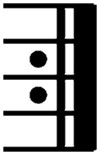
There is a mentality a lot of musicians have that these are optional – but are they really?
As a teacher, I would commonly be asked by students why repeat signs are used. The simple answer is to save paper! It really is that simple. Often it’s easier to utilize repeat signs then to write all the notes again. There are times when repeat signs are used in a piece in one edition, and in another edition, the notes are written out. You would probably never consider leaving out the written notes in this case. So why leave out the repeat in the other instance?
You should never go into a piece expecting repeat signs to be optional; they should be respected just as if the notes were written down in their entirety. There are times when I’ve heard musicians take extremely slow tempos in pieces and inevitably leave out the repeats. If repeats don’t seem to work, maybe your tempo is too slow.
So to answer the question, are repeat signs really important? Yes! Try playing the repeats in your music whenever there isn’t time constraints in your performance and you will be rewarded with the musical form as the composer intended.
Thanks again for joining me Robert Estrin Robert@LivingPianos.com
Living Pianos Podcast – Episode 01- Introduction – Music Conservatories and Auditions


Welcome to the first episode of the Living Pianos Podcast.
Welcome to the Living Pianos Podcast with your hosts Robert Estrin and Mike Wood. On this podcast, Robert and Mike will discuss everything and anything piano as well as general music questions. In the future, we will present interviews with musicians and luminaries in the piano industry as well as inside information about the piano industry.
Robert and Mike have been producing videos for years on their successful YouTube channel and are now bringing the show to a longer audio format with this podcast. This is a great opportunity to interact with our viewers and answer their questions directly. If you have any questions or comments for us, please send them to info@livingpianos.com.
On this episode, they discuss the challenges of getting into a music conservatory and the audition process for schools and orchestras. They also cover opinions on digital pianos as well as emerging technologies in the world of analog and digital music, a complete carbon fiber piano and a question about how to prepare a room for a piano.
What if You Don’t Get Accepted to a Music Conservatory?
Today we are going to talk about a tough subject, not getting accepted to a music conservatory. This is a very real fear for any music student but it’s not the end of the road for your potential career. Today we are going to talk about the options in front of you if you don’t get accepted into the school of your choice.
I know a number of students who worked very hard to get into the schools of their dreams and they ended up getting denied by all of them. This is not necessarily because they are bad students or musicians, it may have more to do with the admissions process for schools than anything else.
Getting into a music conservatory is largely a random process. Picking qualified students is based upon so many random factors that are simply out of your control. How many students are applying that semester? What are students applying? How many openings are there? What is the temperament of the teacher selecting the students? There are dozens of factors that can impact your ability to get into a school every semester – it’s too random a process to guarantee results.
Don’t get discouraged. I have had illustrious students have gotten substantial scholarships to top conservatories yet other schools wouldn’t even let them audition! These are very accomplished students but for whatever reason, some schools didn’t think they fit their program and didn’t even invite them in.
There are options. Other than simply re-applying another semester (which you can definitely do), there are options if you didn’t get into any of the schools you applied to. Whether you are a performance, conducting, or composition major, the most important thing is your private teacher. If you can get a great teacher for your instrument you can progress (arguably) just as fast as you would at a music school. This is a very important investment that should not be overlooked.
Reach out to other musicians in your area. Getting experience playing with other musicians in community orchestras, quartets or small groups is a great way to practice performing with other musicians as well as develop great contacts and more experience and exposure. You can get a lot of music education by utilizing these resources without ever having to set foot in a classroom.
Community College is a great option. If you want to pursue a degree in music and you haven’t been accepted right out of high school I encourage you to attend your local community college. Many of them offer amazing music programs with very accomplished teachers and musicians. Right here in Southern California, there are a number of community colleges that offer great music programs and the instructors are top-notch.
Not only can you gain musical experience at a community college, you can get a lot of your academic classes out of the way (at much lower cost) before you transfer to a university. I know a number of students who have taken this route and gone on to great success.
It’s not the end of the road. Don’t get down on yourself, there are many factors beyond your control that go into the selection process for a music conservatory. If this is your passion then you should never give up; time, work and persistence really do pay off and you can achieve your goals if you keep working towards them.
Thanks again for joining us, if you have any questions or comments about this subject or any music subject at all, please contact us directly info@LivingPianos.com (949) 244-3729.


