

All posts by Robert Estrin

Do All Piano Pedals Feel The Same?

Hi, I’m Robert Estrin, and this is LivingPianos.com. Today’s topic is, “Do All Piano Pedals Feel The Same?” I’m not talking about if the three pedals on a specific piano feel the same as one another. They might feel different from one another. But the question is, is there a standard way that all pianos’ pedals should feel? Believe it or not, the answer is no!

Pedals can feel drastically different from one piano to another.

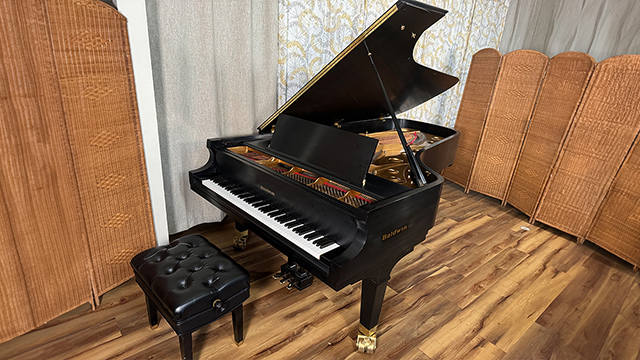
Let me give you a great example. Growing up, my father Morton Estrin had several pianos. We had three or four pianos in the house through most of my childhood. Early on, there was a Steinway model S baby grand from the 1930s as well as a Baldwin L which was a more recently produced 6′ 3″ grand piano. Sitting down at the Steinway, if your foot was even leaning on the sustain pedal, it would start to hold notes. It had a very small amount of travel and it was quite hard to push. Comparing that to the Baldwin sustain pedal, which was easy to push and had a lot of travel to it, it responded completely differently! So why isn’t there a standard?

Whatever piano you play becomes your new normal and you compare all other pianos to it.

So, be sure that if you’re ever performing anywhere, try out the pedals to see how hard they are to push. See how much travel they have and at what point in the travel they start to respond. And not just the sustain pedal. The una corda, or soft pedal, for example, may seem like it isn’t even working. You may not notice any perceptible difference in sound. On other pianos, you push the pedal down, and hear a drastic change of tone! That is something that can be regulated to some extent, but there’s a certain amount that has to do with how much the piano’s been played and how it’s been voiced.

The pedals on pianos are all unique and you must be able to adjust.

Anytime you get an opportunity to play pianos, just for fun, try out the pedals so that when you have a performance, you can adjust quickly for a satisfying musical performance.
I hope this is helpful for you. Send your questions to Robert@LivingPianos.com so I can answer them in upcoming videos. See you next time here at LivingPianos.com, Your Online Piano Store

info@LivingPianos.com
949-244-3729.

Can Your Piano Tuner Appraise Your Piano?

Hi, I’m Robert Estrin, this is LivingPianos.com. Today’s topic is, “Can Your Piano Tuner Appraise Your Piano?” Let’s say you’ve had your piano for a number of years and you have a trusted technician who has maintained it for you. Let’s say you’re moving or you’re upgrading your piano and you want to sell it. Who better to ask than your piano tuner who knows your piano intimately and spends their entire life with pianos?

Most piano technicians have no idea about piano values.

Unless they happen to sell pianos on the side, which some piano technicians do, the vast majority of piano technicians really don’t know the value of pianos. The same thing is true of most piano teachers. Maybe they shopped for a piano 20 years ago and they knew everything about the piano market then. But the market changes so rapidly that even 5 or 10 years ago is not the same as what it is right now.

Most piano technicians have no idea about piano values.

If you have questions about the value of a piano for any reason, whether it’s for an insurance settlement or you want to trade the piano or sell it privately, you’re welcome to contact me personally at: Robert@LivingPianos.com. We are happy to assist you in any way we can here at LivingPianos.com. Send your questions to robert@livingpianos.com so I can answer them in upcoming videos. See you next time.

info@LivingPianos.com
949-244-3729

Did Wagner And Debussy Hate Each Other?

Welcome to LivingPianos.com, I’m Robert Estrin. Today’s topic is, “Did Wagner And Debussy Hate Each Other?” You may have heard about the rivalry and the distaste they had for one another. You can read about that. What I’m going to do is show you musically something quite extraordinary. Debussy mocked Wagner in his music and you can hear elements of humor where it’s least expected and most inappropriate, in Wagner’s famous Tristan theme from, Tristan and Isolde, one of the most deadly serious motifs and chord changes. The whole opera is built upon this chord progression.

Golliwog’s Cakewalk is a piece of Debussy that makes reference to Wagner’s Tristan theme.

But in a totally mocking way that you have to hear to believe! A cakewalk is a dance form. But what happens in the middle? If you listen to the familiar theme and how he pokes fun at it musically, it is an incredibly disrespectful use of Wagner’s music!

Stylistically, Debussy branched into a whole new type of music known as Impressionism, radically different from the deep emotional romanticism of Wagner.

THE PERIODS OF CLASSICAL MUSIC PART 4: IMPRESSIONIST

They didn’t appreciate each other. I’d love to hear from all of you about your opinions of this and you are welcome to listen to the accompanying video example.

I’m Robert Estrin here at LivingPianos.com, Your Online Piano Store. There are lots of videos to come. We welcome your suggestions for future videos. We’ll see you next time!

info@LivingPianos.com
949-244-3729

What is the Meaning of a Musical Life?

Welcome to LivingPianos.com, Your Online Piano Store. I’m Robert Estrin and today’s topic is, “What is the Meaning of a Musical Life?” It’s interesting that the parallels of what makes a meaningful musical life also transcend to life in general. So what is life about? Boy, that’s a big topic for today!

We need each other.

We are, by our very nature, social creatures. And in today’s world nearly everything we use was brought to us from past masters. For example, I play piano. I know a lot about pianos. Could I build a piano? Absolutely not. I don’t have the knowledge of how to build a piano. Just casting the plate alone would be a lifetime achievement for me, not to mention all the other intricacies of pianos. We depend upon computers and smartphones and televisions and cars, and most of us don’t even know the basics about many of these technologies. So in this way, we depend upon each other. What about in primitive societies? Well, they too are social creatures. Think of hunters and gatherers. People were specialized and dependent upon one another to keep watch when there was danger at night so people could sleep. We are an interdependent species. The only way we survive is by working together.

The meaning of a musical life is being able to reach people.

How do you do that? Obviously, in a musical performance, you are reaching people on a very deep personal level, and that is richly rewarding to be able to share feelings that are important to you with other people. But is that the only way to reach people? Certainly not. Teaching is another way to share with others. Obviously you can share a great deal with people, but it goes much deeper. Composing music, writing about music, recording music, even managing musicians, all of this is enriching to people. And the sharing is what brings meaning, not just to a musical life, but life in general. There’s a satisfaction that we get from giving to others in order to receive what we need to survive, because none of us can survive on our own. We depend upon each other.

It’s not a competition.

The meaning of a musical life isn’t to be better than everybody else. That’s a dead end really. First of all, you’re never going to do it all. There’s always going to be somebody better than you, at least in some aspects of the piano or any other instrument. Find your unique voice. What’s most important is having a passion for sharing and reaching people in the first place. That’s really what gives the joy and the meaning to your musical life!

I’d love to hear from you and how you have been able to incorporate music in your life in a meaningful way. This is a great discussion for us to have! You can figure out how to carve a path in your musical life that gives you great joy and meaning to yourself as well as others.

Thanks so much for joining me. I’m Robert Estrin here at LivingPianos.com, Your Online Piano Store. See you next time!

info@LivingPianos.com
949-244-3729

Why You Must Have Rhythmic Tension in Your Music

Hi, I’m Robert Estrin. This is LivingPianos.com. Today’s subject is, “Why You Must Have Rhythmic Tension in Your Music.” What is rhythmic tension? What am I talking about? I’m going to tell you why it’s so important to have rhythmic tension in music and how to create it.

Rhythmic distortion is crucial when playing dance music.

By taking a piece of music that is a dance form, a waltz for example, there must be some distortions to the rhythm. Now you might think you should play exactly what the composer wrote. Truth be known, composers only wrote notes down as guidelines, a skeleton of the composition you must flesh out. So for example, if you were to play a Chopin Waltz with no rhythmic distortion, just absolutely straight where you could play it to a metronome, it would sound lifeless.

You can do your best job at creating the shadings, the expression and playing faithfully to the score, but it will still sound lifeless. Why is this? Well, there has to be motion in music and I chose a waltz for good reason, because dance music is based upon motion, the motion of the dance. A waltz has a strong first beat and a third beat that leads to the next first beat. It’s not just the emphasis, but it’s a pull from one beat to the next. And this rhythmic distortion is essential to be able to get the right feel, not just where it’s obvious in 19th Century music with rubato, or in this case a Chopin Waltz, but with nearly all styles of music.

How do you know if you’re distorting rhythm too much?

You certainly don’t want to play a different rhythm from what the composers wrote. So here’s the key: One way is to play right with the metronome, spot on every beat. Another approach where you may not be able to play along with the music perfectly, however, there is never a gain or loss of any beats. And more importantly, if you tried to tap along, you will feel the pulse. So you pull the listener into the performance. That’s what makes it so compelling! That’s why you must have this rhythmic variety in your music, which you could call distortion. But it is absolutely essential in order to bring your music to life.

I hope this has been interesting for you. I welcome differing viewpoints in the comments below!

Thanks so much for joining me. I’m Robert Estrin here at LivingPianos.com, Your Online Piano Store. See you next time!

info@LivingPianos.com
949-244-3729

Five Signs You Have the Wrong Piano Teacher

Hi, this is Robert Estrin at LivingPianos.com. Today’s subject is, “Five Signs You Have the Wrong Piano Teacher.” Choosing the right piano teacher for yourself or your children can be difficult. Today I will tell you five things to avoid when choosing a teacher.

1. They teach on a spinet piano.

Spinets, those very small upright pianos, don’t have the greatest sound because the strings are so short and the soundboards are small. But there’s more to it than that. Spinet pianos have an easier action than other pianos. Therefore, somebody who practices on a spinet is not really prepared to play a grand piano because a grand piano is so much harder to play. One of the nice things about going to a lesson with a teacher who has a nice grand piano, is that even if at home you only have an upright or even a spinet or digital piano, at least once a week, you see what it’s like to play a more formidable instrument. This prepares you for contests and concerts. That’s one tip. It’s not a deal breaker, but a clue that maybe they aren’t a high level teacher.

2. They babysit their kids during lessons.

You might think that would never happen but it absolutely does! Maybe the kids are in the next room watching TV or maybe they’re fighting with each other and the teacher is really not 100% focused on the lesson. Or worse yet, they babysit neighbors’ kids during lessons! This sounds like a joke, but you would not believe the kind of things that go on.

3. They call themselves piano teachers without any significant piano training.

This isn’t to say that there aren’t some great dedicated piano teachers out there. We appreciate them so much! But there are some who just put ads out and start taking students. Maybe they don’t really have the background or the inclination to really care enough. They’re trying to make money teaching piano without considering the best interests of their students.

4. They hit your hands with a ruler when you miss notes!

This one is a deal breaker. It’s hard to believe that this happens at all, but I have heard of this from many people. I believe it’s sick to inflict pain on students, especially children. You want a teacher to be nurturing and supportive in order to connect with you on a personal level and get you to practice and understand what it’s all about. Certainly inflicting pain is the furthest thing from anything that would be helpful, in my opinion. If any of you have had that kind of experience, I’d love for you to share it in the comments below.

5. They don’t teach you how to practice.

This last one is the most important thing. If a teacher doesn’t show you how to practice, even if they’re spectacular pianists, your progress is going to be hindered tremendously. You only go to a lesson once a week. But imagine a teacher who shows you what to do the other six days of the week. You are going to improve exponentially with a teacher who shows you step-by-step exactly what you should be doing at home. This is the most critical thing and maybe not the most obvious thing to look for in a teacher. If any of you have teachers and you get home and you have no idea where to even start, the teacher really isn’t giving you the tools you need. You want a teacher who will show you step-by-step how to practice. This way you can be productive without them, so eventually you won’t even need a teacher! You can practice on your own and accomplish great things.

I hope this has been helpful for you. I welcome your viewpoints in the comments below!
Thanks so much for joining me. I’m Robert Estrin here at LivingPianos.com, Your Online Piano Store. See you next time!

info@LivingPianos.com
949-244-3729