

Tag Archives: living pianos

Piano Tuning Problems? | The REAL Solutions Nobody Tells You

Welcome to LivingPianos.com. I’m Robert Estrin. What can you do with a piano that won’t stay in tune? There is a lot to this subject, and I want to share some tips that could really make a difference for your piano.

First, Determine the Cause

The first step is figuring out why the piano isn’t staying in tune. There can be many possible reasons. One of the biggest factors is the environment the piano lives in. Stability of temperature and, humidity can make a huge difference in how well a piano holds its tuning.

The Importance of Regular Tuning

Here is something many people don’t realize. If you go years without tuning your piano and then finally have it tuned, it probably won’t hold very long. In fact, the more often you tune a piano, the more stable it becomes over time. You never save money by putting off tuning. When a piano has drifted far from pitch, the technician may have to tune it twice in a row just to bring it back to the correct pitch level. Even then, that tuning may not hold very long. So two key principles are simple. Provide a stable environment and tune the piano regularly.

How Often Should You Tune Your Piano?

People ask this question all the time. The Piano Technicians Guild often recommends tuning four times a year. Many people are surprised by that number. At a minimum, tuning twice a year is very important because of seasonal changes. When you go from heating to air conditioning and back again, the pitch of the piano can shift. Sometimes the piano might still sound fine, but the entire instrument may have gone flat or even sharp. The secret to tuning stability is staying ahead of those changes. When a piano is tuned consistently, it becomes more stable.

In music conservatories, concert pianos may be tuned every day. The two Steinway pianos on stage at one of my conservatory were tuned daily for so long that technicians told me they almost never found a note out of tune. The instruments had become incredibly stable. At my father’s recording sessions, tuners were present during the entire sessions so when even one unison went out even slightly, they touch it up immediately. My father had his own pianos tuned monthly in his studio because of the heavy teaching and practice they received.

What If the Tuning Pins Are Loose?

Suppose you provide a stable environment and tune the piano regularly, but it still won’t hold. Sometimes the issue is loose tuning pins. There are two main possibilities, and this is where a bit of detective work comes in. If you notice several loose pins forming a straight line, that often indicates a crack in the pinblock. A technician might try installing oversize pins, but this can actually enlarge the crack. In that case, the real solution is rebuilding the piano.

Rebuilding involves removing the strings, lifting out the plate, and crafting a custom pinblock specifically for that piano. The holes for the 220 to 240 tuning pins must be drilled with extremely precise tolerances and angles. After restringing, the piano must be tuned repeatedly until it stabilizes. It is an involved and expensive process.

When the Pins Are Just Slightly Loose

Sometimes the situation is less severe. Instead of a line of loose pins, you may find that a general area of the keyboard has pins that are just a little loose. If there is space between the coils of the string and the plate, a technician may be able to tap the pins slightly deeper into the pinblock to gain more traction. This must be done very carefully. The bottom of the pinblock needs proper support, or the lower layers of wood can be damaged, which would create a serious problem. When done correctly, however, this small adjustment can sometimes solve the issue.

Another possibility involves chemical agents designed to increase the grip between the pin and the pinblock. These compounds are similar to super glue, but they are not actually gluing the pins in place. Instead, they increase the surface contact slightly. The feel of the tuning pins can become a little scratchy rather than smooth, but in some cases this treatment can help a piano hold tuning for years. It can be a practical option if the piano is not worth the expense of a full rebuild but you still want it to stay in tune.

Using Larger Tuning Pins

There is one more option if the pins are generally loose but not failing in a specific line. A technician can sometimes restring the piano using slightly larger tuning pins. Pianos typically start with what are called number two pins. Each step up in size increases the diameter by one thousandth of an inch. Moving from twos to threes or even fours can provide the extra grip needed. This approach allows the existing pinblock to remain in place. The plate does not have to be removed, and a new pinblock does not need to be built.

A Quick Recap

If your piano won’t stay in tune, start with the basics. Provide a stable environment with controlled temperature and humidity. Tune the piano regularly so it gradually becomes more stable. If certain pins are slipping in a straight line, a cracked pinblock may require rebuilding. If the looseness is more general, a technician might tap the pins deeper, use a chemical treatment, or install slightly larger tuning pins. These are all techniques that can sometimes bring a stubborn piano back to reliable tuning stability.

If you have other ideas or experiences with this issue, feel free to share them in the comments here at LivingPianos.com, Your Online Piano Store. I’m Robert Estrin, thanks for joining me.
Why You Must Learn to Fake At The Piano

Welcome to LivingPianos.com. I’m Robert Estrin. Today I have a really provocative subject for you: Why You Must Learn to Fake at the Piano. Now, if you have ever had a teacher or studied seriously, you have probably been told that faking is the worst thing you can do. You want to play with integrity. You want to honor the score. So how could I possibly tell you that you absolutely must learn how to fake?

The Wall Between Practicing and Performing

I have talked before about the necessity of building a wall between practicing and performing. They are completely different experiences. If you are not clear which one you are doing, you are likely not accomplishing either one effectively.

When you are practicing and something goes wrong, you must stop immediately. Find the place in the score. Identify the correction. Cement the correction. Then go back a bit so you can pass that trouble spot successfully. Finally, return to the beginning of the piece or section and integrate the fix into the larger context. That is how you prevent mistakes from becoming ingrained. You nip them in the bud. But when you are performing, the situation is exactly the opposite. The last thing an audience wants to hear is you practicing while you are supposed to be playing for them.

Why You Must Keep Going in Performance

In performance, if something goes wrong, you must keep going no matter what. You might wonder how great concert pianists can play for hours and seem flawless. Of course, nobody is perfect. There are always finger slips or momentatry memory lapses. The difference is that seasoned artists know how to recover without disrupting the flow.

When I was a child, I had the opportunity to hear the great Arthur Rubinstein in concert for his 80th birthday. I was enthralled. We even got to meet him afterward, and he was incredibly gracious. After the concert, my father mentioned that in the Beethoven sonata Rubinstein had improvised his way through a memory slip. I was shocked. I had no idea anything had gone wrong, and I would guess that the vast majority of the audience did not notice either. Only someone who knew the piece intimately could have detected it. That is the art of faking. It is not about being careless. It is about preserving the musical experience for the listener.

The Danger of Stopping

Think of watching a movie. You are absorbed in the story. If there is a sudden jump cut or the film skips backward even briefly, it is jarring. It takes you out of the magic. The same thing happens in music. The moment you lose time or stop to fix something, even listeners who know nothing about music can feel it. Suddenly they cannot follow the pulse. Instead of enjoying the music, they start worrying about you. That tension replaces enjoyment. As much as you may want to fix the mistake, you must resist that temptation in performance.

Practice Performing

There is practicing. There is performing. And then there is practicing performing. Whenever you sit down at the piano, you should know which one you are doing.

To practice performing, take a piece you feel reasonably secure with and play it through as though you are in concert. Do not stop. No matter what happens, keep going. If you lose your place, keep one hand moving while the other finds its way. Stay in time. Do not go back. Do not skip ahead. Stay where you are in the music and reestablish control. It is far better to simplify or approximate for a moment than to derail the entire performance. You can even record yourself and make a rule that once you start, you cannot stop. This is tremendously valuable training.

Develop Your Ear to Support Recovery

One of the best ways to strengthen this skill is to sing your music. The piano is unique in that you can produce a sound simply by pressing a key. You do not have to hear it internally first. But when you sing, you must hear the pitch before you produce it. As a French horn player, I can tell you that you absolutely have to hear the notes before you play them. Singing builds that connection between your ear and your fingers. If you can sing a melody and have even modest ability to play by ear, you can often find your way through a rough patch without anyone realizing it. Keep counting. Keep the fingers moving. Stay in the moment. Over time, this even enhances your musicianship. I have had occasions where I experienced a brief memory lapse and played by ear to get through it, only to discover afterward, listening to the recording, that I had actually played the correct notes! That comes from improvising and developing a strong connection between what you hear and what you play.

The Secret to Confident Performing

Prepare thoroughly before any performance. Then practice performing. Play for friends. Play for small groups, then larger ones. Use those opportunities to experiment with keeping the flow no matter what happens. When you know you can recover smoothly, much of the fear of performance disappears. And your audience will appreciate a seamless musical experience far more than a technically perfect one interrupted by stops and restarts.

So remember, build that solid wall between practicing and performing. Know which one you are doing. And yes, learn how to fake. If you cultivate your ear, practice performing, and stay committed to the musical flow, your faking can become so seamless that, just like that Rubinstein concert, nobody will be the wiser. That is the lesson for today. Embrace it, and it can be a true game changer in your piano playing.

This is Robert Estrin at LivingPianos.com, Your Online Piano Resource. Thanks so much for joining me.

How Fast Can You Name These Classical Masterpieces?

Welcome to LivingPianos.com. I’m Robert Estrin. Today I have something a little different and a lot of fun for you. In this video, I put your ears to the test with a musical guessing game. I play short excerpts from some of the most famous classical piano works ever written, and your challenge is to identify each piece as quickly as possible. Some may be instantly recognizable from just a handful of notes, while others might take a few more seconds before everything clicks into place.

This is more than just a trivia game. It is a wonderful way to sharpen your listening skills and discover how deeply these great works are etched into your musical memory. You might surprise yourself by recognizing a piece from its harmony, rhythm, or even just its texture before the main theme appears. See how many you can name within ten seconds, keep score if you like, and share your results in the comments. I would love to hear which ones you knew right away and which ones kept you guessing.

Let us know how you did on this listening test!

Leave comments about pieces you would like full tutorials on.

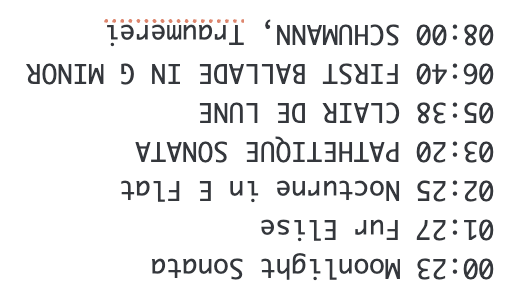
Here are the pieces heard in the recording:

ANSWERS

The Shocking Truth About Piano Storage

Welcome to LivingPianos.com. I’m Robert Estrin. If you are considering putting a piano into storage, this is something you absolutely need to think through carefully. I have seen this scenario play out time and time again, and it can end in a way most people never expect.

Climate Control Is Not Optional

People are downsizing, they cannot sell their piano, or they think they may be moving. So what do you do? You find a place to store your piano. If you ever have to do this, make absolutely certain that it is climate controlled storage. I remember having pianos at a storage facility and only later being told that winter was coming and we had better get the pianos out of there. So double check. Make sure the facility is truly climate controlled. This is critical for the health and longevity of your instrument.

The Hidden Costs of Storage

Here is what often happens. You pay month after month to store the piano. Eventually, you have paid so much that you start to wonder what to do next. If you decide to try to sell the piano, good luck. In many storage facilities, pianos are stored on their sides to maximize space. Just to have someone come and look at the piano, you may have to pay hundreds of dollars to have it set up properly. And of course, it will not be tuned because it has been sitting in storage. It can become a nightmare situation for so many people.

What Happens When Payments Stop

Now here is the part that may really shock you. After paying month after month, sometimes for years, people reach a point where they simply stop paying. They do not know what to do with the piano. Often they have already moved, which is why the piano went into storage in the first place. Storage companies will make a good faith effort to contact the owner. But if they cannot reach them, they sell the piano. So after spending hundreds or even thousands of dollars in storage fees, the piano may ultimately be sold by the storage company. I know this for a fact from at least two companies I am intimately familiar with, and this is something that happens on a regular basis.

Think Long Term Before You Store

The lesson for today is simple. Before putting a piano into storage, think long term about your end goal. You do not want to be stuck spending hundreds or thousands of dollars on a piano you may never get out of storage again.

If I can be of any help to you, please reach out to me at Robert@LivingPianos.com. We have many resources available for you here at LivingPianos.com, Your Online Piano Resource.

What Happened to the Greatest Piano Ever Made?

Working My Way Up to Something Special

Over the years, I gradually worked my way up through different pianos. At one point I had a Young Chang 6’1″, and from there I upgraded to a Baldwin L. Each instrument was a step forward, both musically and personally.

Then something unexpected happened. My top piano technician, who was a concert technician, owned an older Mason & Hamlin BB. For those of you who may not know, the BB is a 7-foot grand known for its massive construction and rich tone. Mason & Hamlin pianos have a distinctive depth of sound, and this one was particularly special.

What made it extraordinary was not just the design, but the care it had received. It belonged to a master technician. The regulation and voicing were superb. Everything about the instrument felt refined and responsive. When he decided to move away, he asked me to sell the piano for him. The moment I played it, I knew I wanted it myself. So I sold my piano and bought the Mason & Hamlin. I truly believed I had found the ultimate instrument.


An Offer I Did Not Expect

Not long after that, a concert pianist came in looking for a piano for a friend. At the time, I had a Baldwin L for sale. He tried it and liked it. Then he sat down at my Mason & Hamlin. I told him it was not for sale. He understood, but he kept playing it anyway.

A few days later, he returned and played both pianos again. This time, he made me an offer to purchase both instruments. It was not an easy decision. The Mason & Hamlin was supposed to be my piano. But the offer was significant, and I reluctantly agreed.

Almost immediately, I felt what you might call “seller’s remorse.” I realized that if I ever wanted something equal or better, I would have to look for a 9-foot concert grand. So that is exactly what I did.


Searching for the Ultimate Concert Grand

I brought my technician with me as we searched far and wide for the right instrument. At one point, I even purchased a 9-foot Baldwin in San Francisco. We brought it back and worked on it extensively. It was a fine piano, but it was not quite the extraordinary instrument I was hoping to find.

Then we discovered a Baldwin SD-10 concert grand in the San Fernando Valley. This is a 9-foot concert grand and one of the great American pianos. From the first notes, it was clear this was something very special. My technician told me it was one of the two or three finest pianos he had ever encountered, and he had worked on countless concert instruments. I absolutely loved that piano.

A Piano That Inspired Pianists

We used that Baldwin SD-10 for a concert series, and pianists who performed on it consistently praised it. Many told me it was the best piano they had ever played. It had power, warmth, and remarkable control across the entire range of the keyboard. It was everything I had hoped to find.


A Change of Circumstances

At the time, we were in a loft with 19-foot ceilings, and the piano filled the space beautifully. However, when we moved to a smaller location, it became clear that the instrument was simply too powerful for the room. It was more piano than the space could comfortably handle.

After much thought, I decided to put it up for sale. There was strong interest from around the country. Two different concert organizations were seriously considering purchasing it, and we even discussed the possibility of my performing a dedication recital when the piano was installed. It seemed like the perfect way to pass along such a remarkable instrument.

An Unexpected Buyer

Because those organizations needed board approvals, the process took time. Meanwhile, one Sunday afternoon, an elderly couple came in from the desert. They had seen the piano listed online and wanted to see it in person.

The gentleman sat down at the piano and played just one thing. He stood up and said, “I’ll take it.”

The one piece he played on that piano was Chopsticks!

Where It Ended Up

After all the performances, all the praise from accomplished pianists, and all the discussion of concert halls and dedication recitals, the greatest piano I ever owned ended up in a private home in the desert… For Chopsticks. So I have some mixed feelings about the sale of that piano.

So that is what happened to the greatest piano ever made, at least in my experience. If you have your own story about remarkable pianos, share them in the comments here at LivingPianos.com and on YouTube! Thanks again for joining me.

CONQUER TRILLS ON THE PIANO!

How to Play Trills on the Piano – Piano Lessons with Robert Estrin

I’ve had quite a few people recently asking me for tips on how to play trills on the piano. It’s no easy task – or is it? This video and article will provide a few tips and techniques you can use to help master trills. The first thing to do is make sure you play your trills with minimal arm weight. If you’ve watched some of my other technique videos you know that I emphasize arm weight as a very big component in tone production – especially when it comes to slower melodies. The challenge with trills is playing lightly, almost floating your hand above the keys to allow the notes to flow with minimal effort. The next thing in playing trills is keeping your fingers very close to the keys. Trills are played so fast that there is not a lot of time for movement, so it’s best to keep your fingers very close to the keys – so close you remain in contact with the keys! Another thing is to make sure your fingers are rounded. It’s nearly impossible to play fast with outstretched fingers; keeping them rounded will help improve speed dramatically allowing more than just one joint to execute the trill. These are some of the most important aspects when it comes to hand position. However, there is something fundamental about approaching trills. Even if it sounds like just a bunch of notes, you need to figure out exactly how many notes you are playing as if it’s written out. Learn trills like you would learn any other fast passage in your music working with the metronome increasing one notch at a time as you gain confidence. Another big question is how to know how many notes to play in a trill. One valuable technique that I use frequently is to play just one note of the trill. For example, if you are playing a trill and starting on the upper note, just play that upper note. You will get an idea of how fast you can play the trill by only playing one note of the trill first, either the top note or the bottom note – whichever one you are starting the trill on. This brings up an important subject in trills, what note does it start on? This could really be a subject for an entirely separate video but I am going to provide some basic information here. As trills are written, you will usually start on the auxiliary (the note above the written note of the trill; the next note in the scale of that key). For example, if you have a piece in C major and you have a D trill, you would start on E. Can you start a trill on the note written? For example, if it’s written as a D can you start on a D and move up to E? Yes; it depends on the context. There are different schools of thought on this but generally, I would say a trill is basically a long appoggiatura (a non-chord tone resolving into the harmony). So starting on the auxiliary generally makes musical sense. However, in different period styles and in shorter trills, use your judgment as to what sounds best and what you can execute with confidence. The last thing I want to address with trills is one of the biggest challenges; how to end them! If you don’t know exactly where you are it can be difficult to end them smoothly. The good news is there is a great practice technique for this. I always like to play the trill right up to the point before it ends, and then stop in a relaxed manner over the keys. Keep doing that until you have a good grasp on where you will be right before the last notes of the trill. Keep playing that passage over and over and eventually add the last notes of the trill. But don’t play them right away; pause in a relaxed manner before you play the last notes. At first, make the pause as long as you need it; eventually, make the duration of the pause smaller and smaller; until the pause is imperceptible to the listener but guides the ending of the trill for you!

What’s the Difference Between a Mordent and a Trill?

Mordents and trills look so similar on the page. You usually find these in Baroque era music of Handel, Bach, Scarlatti and other composers from that time. I want to show you one specific difference that’s very important. The beginning of the Sarabande movement of the 5th French Suite of Bach starts with a mordent. You can hear me play it without the mordent on the accompanying video first. Shortly after, there is a trill so you can discern the difference. You will hear it played first with no ornamentation. Mordents and trills differ from each other in two interesting ways. Bach wrote a mordent on the first note in the right hand which is a “B”. The secret to a mordent is you add the note below and then go back to the note that’s written so when you have a B you’re going to play B-A-B. So what’s different about trills? Right after that, you have a trill. Trills start on the upper note. Typically trills can have more than one or two notes and this is for freedom of expression. In fact, the whole Baroque era is noted by its ornamentation. And it isn’t just music. Take a look at the architecture and the art of that period. It’s noted for the filigree and all the beautiful fine detail. Ornamentation is an opportunity for the performer to add their own expressive element. That’s why if you listen to different performances of the same exact pieces of Bach, Handel, Telemann, and other Baroque composers, the ornamentation can be quite different. You can listen to how it sounds with the ornamentation. You have to watch the squiggly lines: the mordant has often has one less than trills and have a vertical line.

The Periods of Classical Music Part 1: Baroque Era

The Baroque era pretty much extends from around 1600 to the mid-1700s. What distinguishes this era of music from others? Baroque music, much like the art and architecture of the time, is very ornate. There are a lot of different textures and the music is very linear. The music often has several lines of music that intertwine. One of the paramount musical forms is the fugue – which has a subject and counter-subject that develop in an intricate fashion. It’s very important in Baroque music to not favor the top line of music as is typical in other periods of music. Baroque music is much more like a tapestry of sound – it should all blend together well. I perform an example of this in the video above with the fifth French Suite of Bach. Notice how even though there is a melody, I allow the other parts to have equal say. The other thing that is a vital component in Baroque music is keeping a steady beat. There is little give and take as in other period styles of music; you should be very clear and be able to hear the lines and allow the counterpoint to come through. You should also employ a minimal amount of pedal when it comes to the piano. When you are playing with other instruments, articulation is vital to getting a clear sound and style. Another thing to keep in mind with Baroque music is the ornamentation involved. You might notice a bunch of ornamentation markings sprinkled around Baroque scores and there are countless ways to interpret these. Ornamentation includes things like trills, mordants, turns and other techniques that are used to embellish your music beyond what’s written on the page.

What Are The BEST Trill Fingers?

I’ve talked before about how trills must be measured. You have to know exactly how many notes you’re playing in a trill. Even though when you listen to a trill it sounds like a free form explosion of notes going back and forth, trills have to be measured so you know exactly how many notes you play. Otherwise, ending a trill is impossible because you’re leaving it to chance whether you end up on the right note or not! You don’t always get to choose your trill fingers. There are some instances, for example in Bach Fugues, where you must trill with four and five. These are the worst fingers to trill with! Try to avoid four and five as trill fingers. A lot of people think three and two are the best trill fingers. And indeed, three and two are pretty strong trill fingers. But the best trill fingers are actually three and one! Three and one are the strongest fingers. Your thumb is the strongest finger and the third finger is probably your second strongest finger. Three and one are terrific for trills. Four and two could work nicely as well. There are a lot of different possibilities. Three and one are great when you have that possibility. Three and two are good too. It depends where you’re coming from and where you’re going in your score to determine what the right fingering is. Not only that but if you have other lines within the same hand, sometimes as I said, in contrapuntal writing in fugues particularly, you might not have much of a choice as to which fingers to use for trills. I’m going to give you one final trill fingering tip.
I’m going to show you something that’s really interesting and it ties right in with the idea of measuring your trills. If you measure your trills, you might want to try alternating three, one, three, two. By using those fingers, you actually reduce the load of the trill to three fingers so none of the fingers have to work quite as hard. Not only that but it helps you to measure your trills. Even if you don’t end up using three, one, three, two as trill fingerings, it will help you to make sure that you’re playing the right number of notes in your trills, which is the most important thing! You never want to think of trills as something abstract from music. Just imagine that every single note is written out and play it as it’s written in the score. If you’re figuring out your own trills, find something you can play reliably. Don’t worry about trying to make the fastest trill. What’s important is that it’s musical, repeatable, and dependable. If you can use three and one, or at least three and two, you’re going to be way ahead of the game.

Brilliant Piano Finger Technique – Piano Lessons

When I was growing up, I would listen to some of the great pianists such as Horowitz and Rubinstein. I would also listen to some of the pianists from the early 20th century such as Hoffman, Rachmaninoff, and Joseph Levine. I was always so impressed with the pristine finger work. It almost would sound like a string of jewels because of the evenness of the notes, and I always wondered how to achieve that sound. So today’s show is about how to achieve brilliant finger work. I’m going to regress a little bit more. When I first started studying the piano with my father Morton Estrin, he showed me how to practice scales with raised fingers and often times my students ask me, “Why do I have to raise my fingers?” Let me show you what I’m talking about. With slow scale practice, it’s important for strength to raise the fingers. You may wonder why you would ever want to play that way because obviously when you play quickly, you don’t have time to raise your fingers. The secret to getting the evenness in your scale work and fast finger passages is the release of notes. For example, if you were to put your hand on a flat surface and just try to lift one finger, some of them are pretty hard to lift. Lift your fourth finger with your hands on a flat surface, and it’s very hard. It’s actually the release of notes that takes more strength than the pushing down of notes! So to strengthen and then to release is the reason for practicing slowly with raised fingers so you’ll practice the release of each note and that will lead to the pristine beauty you can get in fast finger work. That is one of the secrets for achieving beautiful clarity in your playing. There are many others that I will discuss in future videos in terms of hand position and other practicing techniques. For now, I suggest that you practice very strongly. Practice your scales and your arpeggios slowly with raised fingers then work up gradually faster. As you get faster, your fingers, by necessity, must be closer and closer to the keys until you can play quickly but still have the pristine evenness, so each note is exactly the same length because the raising of fingers accomplishes the release of each previous note.