

Tag Archives: online piano store

How Do You Know When Your Piano Needs to Be Tuned?

Welcome to LivingPianos.com. I’m Robert Estrin. A question I get all the time is: How do you know when your piano needs to be tuned? There’s actually a wide range of answers, so I’m going to give you the essential information so you can properly maintain your piano.

How Often Should You Tune Your Piano?

The Piano Technicians Guild recommends tuning your piano four times a year. That might sound excessive, especially if you haven’t tuned your piano in years. For most people, I suggest at least twice a year. Seasonal changes, like switching between heating and air conditioning, can cause the pitch of your piano to shift. The entire instrument can go flat or even sharp depending on environmental changes.

Checking Your Piano’s Pitch

One simple way to check your piano is by using a tuning app on your phone. Play an A and see if it’s close to A440. If it’s hovering around 440 or 441, you’re in decent shape. But if it starts drifting lower, that’s a sign your piano needs attention. It’s also important to check different registers. Sometimes the middle of the piano may be in tune, while the upper octaves have dropped significantly in pitch.

It’s Not Just About Pitch

Pitch is only part of the story. Most piano notes have three strings, and the first thing that goes out of tune are the unisons. That means those three strings are no longer perfectly aligned with each other, even if the overall pitch seems correct.

When a note is perfectly in tune, it has a pure, steady sound. But when one string is slightly off, you’ll hear a slow wave in the sound. As the strings drift further apart in pitch, that wave becomes faster and more noticeable.

Listening for “Waves” in the Sound

You can test this yourself by playing slowly through the keys. Listen carefully for any notes that sound like they’re pulsing or beating. That pulsing is caused by slight differences in vibration between the strings. For example, if one string vibrates at 440 cycles per second and another at 441, you’ll hear a beat once per second. The greater the difference, the faster the wave.

Upper notes tend to go out of tune more quickly and can be harder to keep stable, so you may encounter these waves there more often. However, this can occur anywhere on the piano, so it’s important to listen carefully across the entire keyboard for any notes that don’t sound perfectly pure.

Why Regular Tuning Matters

You might wonder why technicians recommend tuning so frequently. It’s not just about business. Regular tuning actually helps your piano stay more stable over time. In fact, the more often a piano is tuned, the better it holds its tuning. Consistent maintenance keeps the instrument closer to proper pitch, reducing large fluctuations. For example, in conservatories, concert grand pianos are often tuned daily. These instruments become extremely stable as a result.

What Affects Your Piano’s Stability?

Several factors influence how quickly your piano goes out of tune:

Temperature and humidity changes
•How much the piano is played
•How forcefully it is played
•How regularly it has been tuned in the past
•Heavily used pianos, like those in practice rooms, can go out of tune very quickly, sometimes in just a single day of intense use.

New Pianos Need Extra Attention

If you have a new piano, or one that has been recently rebuilt or restrung, it will require more frequent tuning. The strings are still stretching and settling, especially during the first couple of years.

To Sum it Up:

There are two main things to watch for: overall pitch and the purity of individual notes. If your piano is noticeably off pitch or you hear wavering in the sound, it’s time for a tuning.

There’s a lot to this subject, but these guidelines will help you stay on top of your piano’s care and keep it sounding its best. If you have specific questions, don’t hesitate to ask me. Thanks again for joining me here at LivingPianos.com, Your Online Piano Resource.

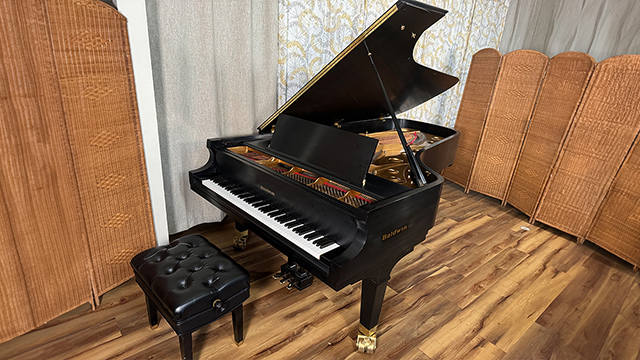
Mozart Alla Turca Sonata #11 K331- Complete | Performed on a Baldwin SD-10

You can compare the sound of this Baldwin SD-10 to Steinway here:

Daniel Barenboim: https://youtu.be/FZ1mj9IaczQ?si=hlHX7MpwQQhniBvU
Ivo Pogorelich: https://youtu.be/IfFGmpB1OhU?si=UmSUoiAbbiFrK0g6

1st movement: Watch
2nd movement: Watch
3rd movement – Turkish March: Watch

What are your impressions of the sound of Baldwin versus Steinway? Leave your comments here.

The Most Explosive Ending in Piano — Chopin Ballade No. 1 Coda (PART 3)

Welcome to LivingPianos.com. I’m Robert Estrin. Today we are diving into part three of the Chopin G minor Ballade, focusing on the coda of this monumental work. If you have been following along, you know just how challenging and exhilarating this final section can be.

Start the Coda Early
One of the most important practice tips is to begin working on the coda early in your learning process. Do not wait until you have learned the rest of the piece. The coda can take a significant amount of time to develop, and if you leave it until the end, it may delay your overall progress. By starting it early, even before reaching the halfway point of the piece, you allow it to grow alongside the rest of your interpretation.

A Cascade of Techniques
Much like the middle section of the Ballade, the coda presents one technical challenge after another. It is a continuous stream of different techniques, each requiring careful attention. One particularly tricky aspect is the rhythmic interplay between the hands. This takes time to internalize, so be patient and methodical. Pay close attention to the articulation in the coda. Only the single notes are marked staccato. Many pianists mistakenly play everything short, but that is not what Chopin wrote. Let the chords have more length. This creates a richer, more beautiful sound and brings out the musical phrasing more effectively.

Slow Practice Is Essential
Slow practice is your foundation. Take the time to articulate everything exactly as written, including accents and note lengths. This ensures clarity and control as you gradually build speed. Practicing hands separately is also invaluable here. Each hand has very different technical demands, and isolating them allows you to master their individual roles before combining them. Experiment with different rhythms. Try dotted rhythms, reversed dotted rhythms, and varied groupings of notes. These approaches help you gain control and evenness. You can also practice passages as chords to better understand the harmonic structure, then return to the written figuration with greater confidence.

Accents Shape the Music
Accents are crucial in shaping the music. They help define the structure and give the illusion of power without requiring you to play everything loudly. Reserve your strongest playing for the most important notes and phrases.

Endurance Through Relaxation
One of the biggest hurdles in any intense coda is simply lasting until the final chord. The key is learning to relax within the music. I recommend experimenting with different note groupings to find the natural “pivot points” where your hand can breathe. By practicing intentional stops to release tension, you’ll develop micro-relaxations that occur naturally as you play. This lets you conserve energy and avoid the “wall” of fatigue. Great piano playing isn’t just about power; it’s about the efficient use of every ounce of energy.

Build Speed Gradually
For fast passages, use a metronome and increase the tempo gradually. Work in small sections and aim for precision at every stage. In unmeasured or freer passages, focus on hand positions and groupings. Break them into small units, practice each group, and then connect them. Always think of these passages as melodic, even at high speed. They are not just technical exercises but expressive lines.

Scales and Pedaling
The scale passages require solid technique. When starting a scale, hold each note long enough at the beginning, and start gently so you have time to build volume as you ascend. It doesn’t need to be loud from the very bottom. Many pianists blur these passages with the pedal. My father, Morton Estrin, would always lift his foot off of the pedal entirely on these runs. Another approach is to use subtle pedaling, perhaps refreshing it with each octave to maintain clarity while adding resonance.

Octaves and the Role of the Wrist
The final section with octaves demands proper technique. Octaves should be played primarily with the wrist. A flexible, controlled wrist is essential. The arms are too slow, and the fingers alone don’t have enough power. You need to isolate the wrist motion from the arms to play the octaves cleanly and with control. This will give you both speed and endurance.

Experiment and Discover What Works for You
There is no single way to master this coda. Try different practice techniques, dynamics, and articulations. Play one hand louder than the other. Change rhythms. Explore new approaches. The key is to listen carefully and remain open to experimentation. Through this process, you will discover what works best for you.

The coda of Chopin’s G minor Ballade is as thrilling as it is demanding. With thoughtful practice, attention to detail, and a balance of strength and relaxation, you can bring it to life with confidence and musicality. The primary practice that will solidify this coda is working section by section, both hands separately and hands together, playing progressively faster with the metronome.

I hope you find these insights helpful in your practice. Let me know what you think in the comments here at LivingPianos.com and on YouTube!

How to Learn Mozart’s Famous C Major Sonata: A Step-by-Step Guide

Welcome to LivingPianos.com. I’m Robert Estrin. How many of you have played that famous C major sonata of Mozart, or always wanted to play it? If that sounds like you, you’re in the right place. We’re going to take a complete deep dive into how to learn and master this ubiquitous Mozart sonata, starting right from the beginning.

A Section-by-Section Approach

We’re going to start at the very beginning and work through the piece section by section. By the end of this video series, you’ll be able to truly master this wonderful sonata. Have your score ready. There’s a link in the description so you can follow along with the music, and I’ll be here to guide you every step of the way. As we go, I’ll explain sonata allegro form so you can understand the structure, but more importantly, learn how to execute it cleanly and get that sparkle you’ve always wanted in this piece.

Exposition

Sonata form begins with the exposition, where the main themes are introduced. The opening theme is in C major, and from there the music moves into the second subject. It’s helpful to slow down here and focus on just this section so everything is completely clear before moving on.

How to Learn a Piece Like This

How do you actually learn something like this? I always recommend reading through the entire movement a couple of times first, just to get acquainted and understand the overall shape of the music. Then get right down to work in very small sections. You can learn four measures at a time, or even just two. Many people think learning two measures at a time will take forever, but it’s exactly the opposite. The smaller the section, the longer and more productive your practice sessions will be. You won’t feel overwhelmed, and you can really digest the score. Two measures at a time is more than enough to make solid progress.

Learn the Right Hand First

At the very beginning, take just the right hand. Follow all the markings in the score, including the notes, rhythm, phrasing, expression, and fingering. If you’re using an Urtext edition, you’ll notice it contains only what Mozart wrote, which means there may be no fingering included. In that case, you may want to reference another edition that includes fingering, such as editions available from Virtual Sheet Music or IMSLP.

Learn just the first two measures with the right hand. This won’t take long. Play it several times until it’s memorized, checking back and forth with the score. Once it feels comfortable, increase the speed.

Then Learn the Left Hand

Next, learn the left hand. Because it’s built on broken chords, start by learning the chords as solid blocks. This helps you understand the underlying harmony and naturally leads to good fingering. Memorize those chords first, then break them up and play them as written.

You may find that using pedal creates a beautiful sound. While Mozart’s piano didn’t have a modern sustain pedal, it did have a knee lever that served a similar function. Still, too much pedal can blur the texture. Instead, you can use what I call a phantom pedal by holding the first note of each chord. It’s not essential, but it produces a lovely effect.

Once the left hand is secure, make sure the right hand is still correct. Check all the details. For example, notice the slur in the second measure and be sure to shape it properly. You never save time by learning something incorrectly, even if it seems minor.

Put the Hands Together

The hardest part of piano playing is putting the hands together. Once each hand is securely memorized, slow the tempo way down and try playing hands together from memory. And check your work. Make sure, for example, that the C in the right hand releases exactly when the E plays at the quarter rest at the end of the second measure. Be fastidious with the details, because you will spend ten times longer fixing anything you didn’t pay attention to initially. If you’ve ever learned something wrong, you know how hard it is to eradicate it. Don’t be in a rush to get it halfway there or even 95 percent there, because that last 5 percent will take far longer than learning the whole thing correctly in the first place. Get it right from the start by breaking it down carefully.

Trills Without Stress

In the fourth measure, there is a trill. Trills must be measured, but they don’t have to be fancy. A simple trill using steady 16th notes is perfectly effective. You can always embellish later if you want, but first learn a clean, basic trill so you can move forward confidently.

This same principle applies throughout the movement. Don’t get stuck trying to execute elaborate ornamentation. Learn the movement first. Mozart gives you artistic license with trills, and simplicity can be just as beautiful.

Scale Passages and Technique

Now, in terms of the scale passages that follow, you can practice them just like scales. I’ve got a detailed scale tutorial video that I highly recommend, which shows how to practice these passages with proper technique with a metronome at a slow tempo. Use a slow tempo and focus on raised, rounded fingers. Articulate not only the attack of each note, but also the release, so everything stays clean and controlled.

Keep your hand position secure so the thumb has room to move. Avoid playing too far out on the keys or flattening your fingers. Rounded fingers make them effectively the same length, allowing for ease and consistency. Start very slowly if necessary and gradually increase the tempo.

You need to use your wrists for staccatos. If you use your arms instead, it will sound like a wet noodle. This way of articulating is especially important at faster tempos. Although Mozart wrote very few dynamics and phrasing markings, that doesn’t mean the music should be played without expression. Logical dynamics and phrasing is required to bring the music to life!

Understanding Sonata Form

This movement follows sonata form, which consists of an exposition, a development, and a recapitulation. In the exposition, the first theme appears in C major, followed by a second theme in G major, the dominant. The entire exposition is repeated so the themes become firmly established.

In the development section, the music moves through a variety of keys, all derived from the original material. One of the fascinating aspects of this sonata is that the opening theme appears in F major, the subdominant, during the development. This is unexpected and shows how Mozart often bent the rules of form.

In the recapitulation, the music returns to C major and closes much like the exposition, but now everything resolves in the home key. However, the recapitution never states the first theme in the tonic key which is an interesting break from the typical sonata allegro form.

Repeats and Final Thoughts

It’s important to take the first repeat of the exposition, as this helps the themes become fully absorbed by both the player and the listener. In the recapitulation, the ornamentation can be exactly the same as in the exposition. There is no need to add extra notes or elaborate trills; a simple execution is entirely appropriate and still captures the musical character.

That covers the first movement of this Mozart sonata. With careful practice and attention to detail, it becomes not only manageable, but deeply rewarding to play. In the next part of the series, we move on to the second movement, which is a true gem and a beautiful study in lyrical playing and tonal control. Thanks for joining me here at LivingPianos.com, Your Online Piano Resource.
The Ultimate Guide to Transform Your Piano Playing in 2026

Over the years I’ve made a lot of videos about pianos and practicing piano. Today I’m going to provide a concise list of some areas to focus on during your development as a pianist and give some examples of past lessons you can refer to. 1. Memorize, Memorize, Memorize! One of the most important aspects to practicing the piano and developing as a musician is to spend time on a regular basis memorizing music. I can’t stress enough how important this is and how it is often neglected. Any pianist specializing in solo classical music must spend a vast amounts of time memorizing music. The amount of music in the world is endless and nobody can memorize all of it. But if you spend time on a daily basis memorizing music, you will develop security and mastery of performance. Not only will you expand your repertoire, you’ll be giving your brain a workout and you will spend more time focusing on how to play your music rather than what you have to play.

2. Sight Reading Sight Reading is another crucial element to your development as a pianist and is another topic that is often overlooked. Wouldn’t it be great to explore new repertoire and try it out before you commit a significant amount of time learning it? That’s where sight reading becomes incredibly beneficial. Developing your sight reading is very important and if you work on it regularly, you will continually improve.

3. Playing With Other Musicians Playing music with other musicians is not only fun, it’s a necessary experience in developing your own skills. Even if your primary interest is playing solo piano, you should seek out opportunities to play with other musicians and do it as often as possible. There is no need to be intimidated by playing with musicians who are better than you are. In fact, this is one of the best ways to advance your scope as a musician. Even if they play other instruments, examining their sense of style, phrasing, timing and other aspects of their playing can help you develop a new depth of understanding to music. Sight reading might be incredibly difficult on your own as you will find yourself starting and stopping when you make mistakes. When you sight read with other musicians, you will be forced to recover and you won’t be able to stop playing. It forces you to become a better at sight reading!

4. Improvise Often and Don’t be Afraid to Explore New Styles of Music Improvising is so important to understanding your music and gaining a new depth of understanding about how it’s constructed. Many styles of music such as rock and jazz rely on improvisation as a key element to the music and encourages musicians to create something new and interesting every time they perform. Developing your improvisation skills (even with classical music) is a crucial element to becoming a better and more well-rounded musician. Exploring new styles of music enables you to experience and understand styles you might not have been aware of; it can also be a great deal of fun! I’m a classical pianist but when I’ve been at parties with other musicians and played blues music, it’s been a great deal of fun and an incredible learning experience to improvise with them and learn how they approach music. Improvising is also a universal language. If you learn how to read a lead sheet for jazz standards, you can take that anywhere in the world, to play with any musicians. Spoken language is not a barrier for musical performance!

5. Practice Mentally This is something that people might not ever think of. Practicing mentally away from your instrument can offer benefits not possible while playing your instrument. Playing music requires a thought process and there are tremendous benefits to thinking through your music. Let’s say you’re waiting in line at the grocery store. You can practice your music mentally by thinking through a piece with every nuance of performance without any physical restrictions. Going through your music when you are away from your instrument allows you to think about it in a different light. Naturally, practicing with your instrument is essential, but you may rely on motor memory rather than the music. Practicing mentally allows you to think through your music playing it exactly as you want. This can have tremendous benefits strengthening your memory. Just play through your music in your mind and see how far you get. You can always refer to the score to clarify the comprehension of the score.

HOW TO MEMORIZE MUSIC

This might sound like a silly question but sometimes you have a piece you can play with the music in front of you but you haven’t memorized it yet. You might be able to play the whole piece by barely glancing at the music but you still need it in parts. This can be cumbersome and is something you want to avoid. So how do you fix this? I have produced a video in the past on How to Memorize Music. If you haven’t watched it yet I highly recommend it as a companion piece to this article. My very first lesson as a child when I studied with my father Morton Estrin was how to memorize music. It’s a crucial skill that every musician should learn. Taking small sections of music and memorizing each hand separately, then putting them together helps you memorize even the most difficult passages of music. This is a great system to use but how do you account for a piece you almost have memorized? How can you push yourself over the edge and get the whole piece down? I actually have two methods for you. The first is the band-aid approach to practicing music. This technique is simple but very effective. Play through the piece as far as you can from memory. When you encounter a spot that you can’t go past without looking at the music, you stop. Then take this small section and study it intensely. Use the method I detailed above and learn each hand separately first to get the section memorized securely. If the band-aid approach doesn’t work for you don’t worry; you have other options. Rather than starting all over again and learning small chunks at a time, expand the amount of music you learn for each section. So where you might have been memorizing 3-4 measures at a time, try and work with 8-10 measures at a time. Make sure you learn the hands separately and then combine them together. I highly recommend that in the future you start by memorizing your piece as the first step and not the last step. Start by progressing through your music in small chunks and learn each hand separately; then combine them when you’re ready. Ultimately this is a much more efficient way to learn your music.

DO PIANISTS SLOW WITH AGE?

This is a very interesting question. We know as people get older their mobility may suffer and their minds can potentially slow down. But how does this affect their ability to perform music? Today we are going to discuss this and the answer might surprise you! You might think that a performer would naturally slow down with age – but this isn’t always the case. When it comes to prodigies, they tend to play very quickly when they are young, but as they mature they begin to take more time with the music. This is not a case of slowing down due to physical limitations, but as a way to express the music on a deeper level. They learn to express themselves with every note instead of rushing through the music almost like a sporting event. The technical side is one thing, but there is a whole other aspect of why you might find yourself slowing down your playing as you get older. If you take a piece you know very well, you may have played it hundreds or even thousands of times – and to you it might seem slow because you know every single note of it inside out. While it might seem “slow” to you, for your audience, they must digest the music for the first time. They might be overwhelmed by the volume of music to digest. As you mature as a musician, you appreciate what it is like for people to listen to a piece they are not familiar with. Age is not always an indicator of the speed of a musical performance. I’ve heard older pianists who play very fast and younger pianists who play much slower. Sometimes personalities come into play. Often times the differences between professional musicians and talented students are the tempos they take – and this doesn’t mean that more accomplished artists play faster or slower than students. For example, many times, less experienced players will play slow movements much slower than what works, which bogs down the performance, losing the pulse which keeps the music alive. It takes experience to understand how to get these sections to flow and sound natural. Generally, older musicians tend to play slower. But I don’t believe it has anything to do with mobility and age, it’s much more a product of learning how to play expressively.

New vs Vintage Steinway: Which Is Better?

Welcome to LivingPianos.com. I’m Robert Estrin. Today we are talking about a seminal question: whether it is better to buy a new Steinway or a vintage Steinway. You might wonder why anyone would buy a 100 year old piano instead of a brand new one. I get this question all the time, and technicians debate it endlessly. Some say old pianos are junk. Others say they do not make them like they used to. So who is right? Let’s break it down.

The Wood Makes a Difference

The first point is the wood. In the 1920s and 1930s, and even earlier, piano makers had access to old growth wood. Today, most woods are plantation grown. Older woods tend to have tighter grain, which produces greater resonance and depth of sound. There are even major challenges now in obtaining Sitka spruce from Alaska, which is protected. This has created a real crisis in sourcing the finest tonewoods that were once commonly available to piano manufacturers.

Hand Building Versus Machines

Another important factor is how pianos are built. Modern pianos rely heavily on CNC machines, which stands for computer numerical control. These machines are incredibly consistent and precise. Vintage pianos, on the other hand, were hand built. Each one has its own individual personality. When you find a good vintage piano, it has a soul that machines simply cannot replicate. That individuality is something many pianists find irresistible.

The Golden Age of Piano Manufacturing

If you go back to the period before World War Two, there were over one thousand piano companies in operation. Only about 300 or 400 of them were full scale manufacturers, with the rest being smaller assemblers or short lived firms. Still, it was the heyday of piano manufacturing in America. Compare that to today, when only a couple of companies are producing perhaps two or three thousand pianos a year. It was truly a different era.

Why Old Pianos Can Be a Problem

Here is where many people get burned. Pianos are not violins. Violins tend to improve with age, but pianos are machines that wear out. Old strings, cracked soundboards, and worn actions mean that many vintage pianos are essentially furniture unless they are properly restored. To unlock the magic, restoration is essential.

The Hybrid Solution

The solution is a hybrid approach. For example, my piano is a Steinway Model S that my grandfather bought for my father in the early 1940s. It was built in the late 1930s, and it has since been completely rebuilt. You get the original rim, the case, and the structural elements that cannot be replaced. If you are lucky, you also retain the original soundboard, which can be resurrected to produce a magnificent tone. All of the action parts can be rebuilt using Steinway or Renner components. Hammers might be from Steinway or Abel, depending on what is most appropriate for that particular piano.

This is why it is critical to work with a rebuilder who truly understands pianos. Not every Steinway performs best with current Steinway parts, even though Steinway now owns Renner. When done correctly, you can install new strings and a new action while preserving the tonal beauty of old growth wood. This approach gives you the stability of a new piano combined with the tone of aged wood. You can hear a beautiful pianissimo and a gorgeous, singing sustain. That is what people mean when they talk about singing wood from old growth forests. You also get tremendous power and a deep bass growl that is hard to find in most new pianos unless you are spending well into six figures on top tier instruments.

What About Consistency?

One advantage of buying a new piano is consistency, and that is generally true. However, new pianos also have a break in period. During the first couple of years, strings stretch, felt parts settle, and everything gradually seats into place. So the real question is whether you can hear the difference. Listen to Asian production pianos. Listen to new Steinways. If you have tried new Steinways, how do you feel they compare to vintage instruments? I would love to hear your thoughts. Leave a comment at LivingPianos.com, we are Your Online Piano Store!

Also see: New Vs. Vintage Steinway – What They DONT’T tell you: