

Tag Archives: robert estrin

I Practiced So Hard My Fingers Bled — Here’s What I Learned


Welcome to LivingPianos.com. I’m Robert Estrin. When I was in high school, I practiced so intensely one summer that my fingernails actually began to detach slightly from my fingers. There was even some blood on the keys. It may sound extreme, but it taught me an important lesson about developing real strength at the piano, and the truth might surprise you.

A Summer at the Mozarteum

I was seventeen years old when I was accepted to study for a summer at the Mozarteum in Salzburg, Austria. This is one of the world’s great music conservatories, located in Mozart’s birthplace. Walking through Salzburg, you feel the weight of musical history and the sense that music is not just an activity, but a way of life.

I arrived with enormous ambition and chose to take on the music of Franz Liszt. This is not music you approach casually. Liszt demands everything from a pianist, including technique, stamina, and physical power. I was determined to rise to the challenge and practiced for hours every day.

When Practice Goes Too Far

What I did not understand at seventeen was how the hands respond when pushed beyond their limits. The practice rooms were small, each with a Bösendorfer grand piano, and I spent long hours working through demanding passages. The music required tremendous finger strength to project melodies over thick textures. Over time, the repeated pressure and friction caused slight separation of the fingernails from the nail beds on several fingers. It was not dramatic, but there was pain and some bleeding. I remember wondering if this was simply part of the process. Did building strength at the piano require that kind of physical sacrifice?

The Truth About Building Strength

The honest answer is no. You do not have to go through that kind of pain. My experience was the result of overwork and practicing far beyond what my hands could handle at the time. That part was avoidable.

However, there is an important truth here. As pianists develop proper technique, there is a natural adjustment that takes place in the fingertips. Proper playing requires rounded fingers, not flat ones. The fingertips, not the nails, must contact the keys. If your nails are too long, or if your fingertips are not yet resilient, the nails can hit the keys, creating a clicking sound and reducing control. Over time, pianists develop small pads at the tips of their fingers, almost like calluses, which allow for better contact and control. As these pads develop, it is not uncommon for the nail to separate slightly from the nail bed. It is part of the body adapting to the demands of proper technique. This is not something to fear. It is a sign of progress when it happens gradually and naturally. What I did wrong was forcing the process too quickly.

Building Strength the Right Way

Strength at the piano is not built through sheer force or endless repetition. It comes from intelligent practice combined with proper recovery. Just like athletes, pianists must balance effort with rest. A sprinter does not run at full speed for hours, and a weightlifter does not push maximum effort continuously. The body needs time to recover and adapt. The same principle applies to piano practice. Instead of playing for long, exhausting stretches, focus on shorter, highly concentrated sessions. Take a difficult passage and work on it with full attention for a few minutes. Then step away. Rest your hands. Return later and repeat the process. This cycle of effort and recovery builds real, lasting strength.

Strength Versus Control

That summer in Salzburg also taught me something deeper. Being surrounded by dedicated musicians showed me that physical strength is only part of the equation. The pianists who stood out were not the ones who played the loudest. They were the ones who played with control. Their powerful moments felt natural and inevitable, not forced.

Strength without control is simply noise.

True power at the piano comes from using the entire mechanism of the body. The arms must be engaged, and the weight of the arms should support the fingers. When you rely only on finger strength, you work against yourself and risk injury. This was exactly my mistake. When arm weight is properly supported by a relaxed wrist, the tone becomes fuller and more resonant, and the hands remain healthy.

A Better Path Forward

So, do you have to bleed to develop strength at the piano? Absolutely not. But the experience taught me a lesson I have never forgotten. The path to power at the piano is through intelligence, not punishment. Practice with focus and intention, and allow time for recovery. That is how you develop both strength and control.

If you have questions about piano technique or practice, I encourage you to explore further and continue refining your approach. You can also visit LivingPianos.com to discover more resources and insights into the world of pianos.

Are These the Pianos of the Future?

Welcome to LivingPianos.com. I’m Robert Estrin. The piano is one of the most enduring instruments ever created, and in many ways it has remained remarkably consistent for well over a century. But that may be starting to change. Today, I’d like to explore three innovations that could reshape what a piano can be: smaller keys, foldable designs, and aftertouch. And later, I’m going to show you one of my two prototype modular piano systems that delivers a virtual concert grand experience in a completely different way. These are not gimmicks, nor are they replacements for traditional pianos, but they raise fascinating questions about where piano design is headed, what problems are being solved, and what the piano of the future might look like.

Smaller Keys: Expanding Accessibility

Let’s start with smaller keys. The standard piano keyboard was established a very long time ago, and pianists have largely accepted it as fixed ever since. But of course, hands are not all the same size. As a student, I struggled to develop strength and to play large chords effectively because of my hand size. It wasn’t until years later, working with students who had larger hands, that I realized how significant this difference can be. Some pianists are able to master certain repertoire much more easily simply because of their physical advantage.

For many players, standard-sized keys can make intervals like octaves and tenths, as well as big chords and wide stretches, difficult or even impossible. This is where smaller or scaled keyboards become so compelling. This isn’t about making the piano easier. It’s about making it more accessible. If a different keyboard size allows a pianist to play with greater comfort, less strain, and more freedom, it opens the door to more repertoire and a more natural playing experience.

Foldable Pianos: Rethinking Portability

Next, let’s consider foldable pianos. One of the piano’s most obvious limitations is its size and weight. A concert grand is enormous, and even an upright is extremely difficult to move. The idea of a foldable piano is really about rethinking the physical form of the instrument. I’m not referring to inexpensive folding keyboards you might see online, which are not true substitutes for pianos. Rather, I’m talking about the possibility of a serious instrument with a satisfying action and full musical potential in a form that is dramatically easier to transport.

This could be a game changer for performers, teachers, and traveling musicians. When traveling by car, bringing along a digital piano is manageable. But flying with a high-quality keyboard instrument is another matter entirely. Personally, when I’m on vacation and have some free time, I want access to a piano! If there were a high-quality digital instrument that could fit in carry-on luggage, I would be first in line to get one. It’s a radical idea, but also a very practical one.

Aftertouch: A New Dimension of Expression

Now let’s turn to aftertouch, something many traditional pianists may never have encountered. This concept comes from the world of electronic instruments. On an acoustic piano, once the hammer strikes the string, your control over that note is essentially set. Aftertouch changes that by responding to pressure applied after the key is already depressed. This means a note can continue to be shaped even after it has begun to sound. Depending on the instrument, that additional pressure can influence vibrato, dynamics, tonal color, or other expressive elements.

I remember playing a Yamaha GS-1 in the early 1980s. It was an advanced 88-key synthesizer with touch sensitivity and polyphonic aftertouch. That meant you could apply pressure to individual keys after the notes were sounding and bring out different voices independently. The level of control was remarkable. Will every pianist want this? Probably not. But it does suggest a future in which keyboard expression extends beyond the initial attack in ways that acoustic pianos cannot offer.

What These Innovations Suggest

So what do these three ideas point to? To me, they highlight three important directions: greater accessibility, greater portability, and expanded expressive potential through hybrid and digital technologies. None of this suggests that the concert grand piano is going away. Far from it. The acoustic grand remains one of the most extraordinary instruments ever created. However, the definition of what a “piano” is may continue to expand. With advancements in player technology, performances can take place simultaneously on multiple instruments in different locations. You can even experience your favorite pianist playing on your own piano. The possibilities are extraordinary.

We will almost certainly see more hybrid instruments. Alternative key sizes may become more widely accepted. Perhaps one day, concert halls will offer multiple keyboard sizes to accommodate different pianists. We may also see entirely new physical designs and instruments that preserve the essence of piano playing while adding capabilities earlier generations never imagined.

A Glimpse Into Modular Piano Systems

This brings me back to the prototype modular piano systems I mentioned earlier, which are designs I personally developed. What excites me about these is their ambitious goal: to create a virtual concert grand experience in a completely new form. These systems are not intended to replace traditional concert grands. Instead, they offer a fascinating new direction, allowing pianists to enjoy a highly sophisticated playing experience with greater flexibility and adaptability. Imagine having the experience of a 9-foot concert grand anywhere, even in a small apartment, and even being able to play with headphones.

As you consider these developments, think about what they represent. Not just new products or novelties, but a broader vision of where piano design may be headed. The future of the piano may not be defined by a single innovation, but by several paths evolving at once. Some will remain niche, others may become mainstream, and a few may fundamentally change how people think about the instrument.

What do you think? Which of these innovations interests you most: smaller keys, foldable designs, aftertouch, or modular hybrid systems?

And if you want to learn more about pianos and hybrid instruments, visit us at LivingPianos.com, Your Online Piano Resource.

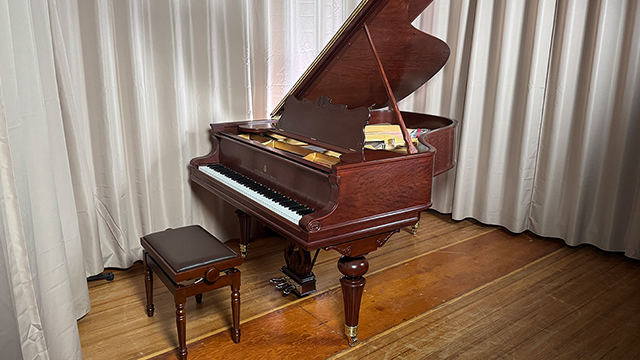
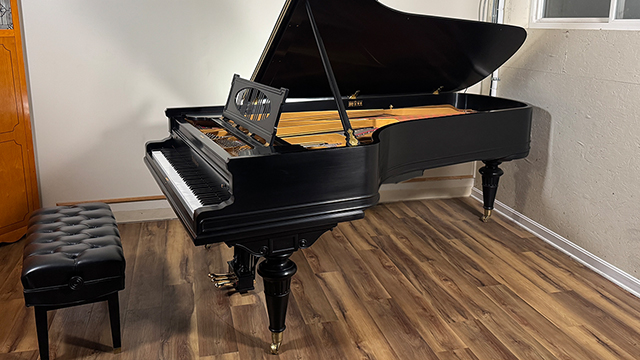
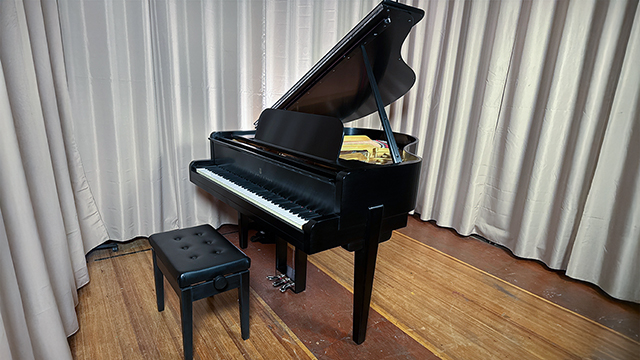
3 Baldwin Concert Grands: 1901 vs 1941 vs 1996 — Can You Hear the Difference?

Welcome to LivingPianos.com. I’m Robert Estrin. Today I have something really special to share with you. We are going to explore three Baldwin concert grands from three different eras, and you will hear them with the same musical excerpt so you can compare their sound for yourself.

What a rare opportunity it is to hear three extraordinary Baldwin concert grands side by side. We begin with a Model D from 1901, then move to an SD-6 from 1941, and finally to an SD-10 from 1996, one of the last of the great Baldwins. As you listen, you will notice that each instrument has a distinctly different character. It is fascinating how the same performance can take on a different personality depending upon the instrument.

Baldwin pianos were the choice of countless legendary artists including Leonard Bernstein, Dave Brubeck, and Liberace. Hearing these instruments from different eras really brings that legacy to life. I would love to hear your impressions, so be sure to leave them in the comments here at LivingPianos.com and on YouTube to join the discussion. Thanks for joining me here at LivingPianos.com, Your Online Piano Resource.

How Do You Know When Your Piano Needs to Be Tuned?

Welcome to LivingPianos.com. I’m Robert Estrin. A question I get all the time is: How do you know when your piano needs to be tuned? There’s actually a wide range of answers, so I’m going to give you the essential information so you can properly maintain your piano.

How Often Should You Tune Your Piano?

The Piano Technicians Guild recommends tuning your piano four times a year. That might sound excessive, especially if you haven’t tuned your piano in years. For most people, I suggest at least twice a year. Seasonal changes, like switching between heating and air conditioning, can cause the pitch of your piano to shift. The entire instrument can go flat or even sharp depending on environmental changes.

Checking Your Piano’s Pitch

One simple way to check your piano is by using a tuning app on your phone. Play an A and see if it’s close to A440. If it’s hovering around 440 or 441, you’re in decent shape. But if it starts drifting lower, that’s a sign your piano needs attention. It’s also important to check different registers. Sometimes the middle of the piano may be in tune, while the upper octaves have dropped significantly in pitch.

It’s Not Just About Pitch

Pitch is only part of the story. Most piano notes have three strings, and the first thing that goes out of tune are the unisons. That means those three strings are no longer perfectly aligned with each other, even if the overall pitch seems correct.

When a note is perfectly in tune, it has a pure, steady sound. But when one string is slightly off, you’ll hear a slow wave in the sound. As the strings drift further apart in pitch, that wave becomes faster and more noticeable.

Listening for “Waves” in the Sound

You can test this yourself by playing slowly through the keys. Listen carefully for any notes that sound like they’re pulsing or beating. That pulsing is caused by slight differences in vibration between the strings. For example, if one string vibrates at 440 cycles per second and another at 441, you’ll hear a beat once per second. The greater the difference, the faster the wave.

Upper notes tend to go out of tune more quickly and can be harder to keep stable, so you may encounter these waves there more often. However, this can occur anywhere on the piano, so it’s important to listen carefully across the entire keyboard for any notes that don’t sound perfectly pure.

Why Regular Tuning Matters

You might wonder why technicians recommend tuning so frequently. It’s not just about business. Regular tuning actually helps your piano stay more stable over time. In fact, the more often a piano is tuned, the better it holds its tuning. Consistent maintenance keeps the instrument closer to proper pitch, reducing large fluctuations. For example, in conservatories, concert grand pianos are often tuned daily. These instruments become extremely stable as a result.

What Affects Your Piano’s Stability?

Several factors influence how quickly your piano goes out of tune:

Temperature and humidity changes
•How much the piano is played
•How forcefully it is played
•How regularly it has been tuned in the past
•Heavily used pianos, like those in practice rooms, can go out of tune very quickly, sometimes in just a single day of intense use.

New Pianos Need Extra Attention

If you have a new piano, or one that has been recently rebuilt or restrung, it will require more frequent tuning. The strings are still stretching and settling, especially during the first couple of years.

To Sum it Up:

There are two main things to watch for: overall pitch and the purity of individual notes. If your piano is noticeably off pitch or you hear wavering in the sound, it’s time for a tuning.

There’s a lot to this subject, but these guidelines will help you stay on top of your piano’s care and keep it sounding its best. If you have specific questions, don’t hesitate to ask me. Thanks again for joining me here at LivingPianos.com, Your Online Piano Resource.

Do You Have to Memorize Music on the Piano?

Welcome to LivingPianos.com. I’m Robert Estrin. Today I’m addressing a thoughtful question from a viewer named Jay about memorization and whether it’s really necessary for pianists.

Jay’s Question About Memorization:

I know that you’re an advocate for memorization, and I continue to be amazed at the depth and breadth of your repertoire. We recently heard Daniil Trifonov play the Brahms 2nd Concerto from memory. Amazing! The reason I’m writing is that we’ve heard other performances where the pianist used a tablet. Lang Lang played the Bartók (with the Vienna Philharmonic in West Palm Beach). We’ve also heard Yuja Wang and Simone Dinnerstein, and they all were using tablets.

My teacher, Dr. Marshall Griffith, has instilled in me the number one goal: to make beautiful, meaningful music! Especially as a 74-year-old, I’m not able to memorize the complex music I play. My question: Is there an unwritten “rule” that pianists play from memory?

This is a terrific question, and the answer might surprise you.

When Playing from the Score Makes Sense

Playing with the score on the piano is not only acceptable, but essential in many situations. For example, a pianist performing within an orchestra will almost always use the score. The same is true in chamber music, where the pianist’s part includes all the other instruments. In these cases, having the score is not just helpful, it is necessary.

A Look Back at Performance Traditions

Interestingly, memorization was not always the norm in keyboard performance. In the Baroque and Classical eras, much of the music did not require extreme movement across the keyboard. There are exceptions, of course, such as some Scarlatti sonatas and certain works by Mozart and Haydn. But generally speaking, the music lay comfortably under the hands, making it practical to perform while reading the score.

Why Memorization Became Standard

As we move into the Romantic period, everything changes. Composers like Liszt and Chopin wrote music filled with large, fast leaps and expansive gestures across the keyboard. In this repertoire, memorization became a practical solution. It allows the pianist to focus entirely on the hands and the keyboard, rather than constantly shifting the eyes between the music and the keys.

What About Modern Performances?

It has become accepted to use the score when playing complex contemporary music. Even so, in solo piano performance, playing from memory is still generally the standard. This isn’t just tradition for tradition’s sake. It comes down to practicality and musical freedom. When a piece is truly memorized, you can devote your full attention to shaping the music, rather than navigating the page.

Can Anyone Learn to Memorize?

If you feel that you can’t memorize, it may simply be that you haven’t been shown how. Memorization is not a passive process. Many people think that if they play a piece enough times, it will naturally stick. In reality, effective memorization requires a deliberate and structured approach.

The Three Essential Skills For a Pianist

In my teaching, I emphasize three essential skills that every pianist should develop: memorization, sight-reading, and improvisation. It’s quite common for pianists to become strong in one or two of these areas while neglecting the others. Each skill has its own methods and benefits, and together they create a well-rounded musician.

Jay, thank you for your excellent question! If you have questions you’d like me to address, feel free to reach out to me – Robert@LivingPianos.com

How To Memorize Music On the Piano: Click To Learn More

The Most Explosive Ending in Piano — Chopin Ballade No. 1 Coda (PART 3)

Welcome to LivingPianos.com. I’m Robert Estrin. Today we are diving into part three of the Chopin G minor Ballade, focusing on the coda of this monumental work. If you have been following along, you know just how challenging and exhilarating this final section can be.

Start the Coda Early
One of the most important practice tips is to begin working on the coda early in your learning process. Do not wait until you have learned the rest of the piece. The coda can take a significant amount of time to develop, and if you leave it until the end, it may delay your overall progress. By starting it early, even before reaching the halfway point of the piece, you allow it to grow alongside the rest of your interpretation.

A Cascade of Techniques
Much like the middle section of the Ballade, the coda presents one technical challenge after another. It is a continuous stream of different techniques, each requiring careful attention. One particularly tricky aspect is the rhythmic interplay between the hands. This takes time to internalize, so be patient and methodical. Pay close attention to the articulation in the coda. Only the single notes are marked staccato. Many pianists mistakenly play everything short, but that is not what Chopin wrote. Let the chords have more length. This creates a richer, more beautiful sound and brings out the musical phrasing more effectively.

Slow Practice Is Essential
Slow practice is your foundation. Take the time to articulate everything exactly as written, including accents and note lengths. This ensures clarity and control as you gradually build speed. Practicing hands separately is also invaluable here. Each hand has very different technical demands, and isolating them allows you to master their individual roles before combining them. Experiment with different rhythms. Try dotted rhythms, reversed dotted rhythms, and varied groupings of notes. These approaches help you gain control and evenness. You can also practice passages as chords to better understand the harmonic structure, then return to the written figuration with greater confidence.

Accents Shape the Music
Accents are crucial in shaping the music. They help define the structure and give the illusion of power without requiring you to play everything loudly. Reserve your strongest playing for the most important notes and phrases.

Endurance Through Relaxation
One of the biggest hurdles in any intense coda is simply lasting until the final chord. The key is learning to relax within the music. I recommend experimenting with different note groupings to find the natural “pivot points” where your hand can breathe. By practicing intentional stops to release tension, you’ll develop micro-relaxations that occur naturally as you play. This lets you conserve energy and avoid the “wall” of fatigue. Great piano playing isn’t just about power; it’s about the efficient use of every ounce of energy.

Build Speed Gradually
For fast passages, use a metronome and increase the tempo gradually. Work in small sections and aim for precision at every stage. In unmeasured or freer passages, focus on hand positions and groupings. Break them into small units, practice each group, and then connect them. Always think of these passages as melodic, even at high speed. They are not just technical exercises but expressive lines.

Scales and Pedaling
The scale passages require solid technique. When starting a scale, hold each note long enough at the beginning, and start gently so you have time to build volume as you ascend. It doesn’t need to be loud from the very bottom. Many pianists blur these passages with the pedal. My father, Morton Estrin, would always lift his foot off of the pedal entirely on these runs. Another approach is to use subtle pedaling, perhaps refreshing it with each octave to maintain clarity while adding resonance.

Octaves and the Role of the Wrist
The final section with octaves demands proper technique. Octaves should be played primarily with the wrist. A flexible, controlled wrist is essential. The arms are too slow, and the fingers alone don’t have enough power. You need to isolate the wrist motion from the arms to play the octaves cleanly and with control. This will give you both speed and endurance.

Experiment and Discover What Works for You
There is no single way to master this coda. Try different practice techniques, dynamics, and articulations. Play one hand louder than the other. Change rhythms. Explore new approaches. The key is to listen carefully and remain open to experimentation. Through this process, you will discover what works best for you.

The coda of Chopin’s G minor Ballade is as thrilling as it is demanding. With thoughtful practice, attention to detail, and a balance of strength and relaxation, you can bring it to life with confidence and musicality. The primary practice that will solidify this coda is working section by section, both hands separately and hands together, playing progressively faster with the metronome.

I hope you find these insights helpful in your practice. Let me know what you think in the comments here at LivingPianos.com and on YouTube!